Snowdonia: Britain’s Best Mountain Scenery, and the Closest Big Hit for Anyone in the South

If you live in the south of England and crave proper mountain scenery, Snowdonia (officially Eryri, though most people still know it by its older name) is the closest place that genuinely delivers. The Lake District and Scotland have their fans, but neither sits within striking distance of a weekend trip from London the way Eryri does, and the scenery here punches well above what the travel time suggests.
How to Get There
By train, your hub is London Euston. Avanti West Coast runs direct services along the West Coast Main Line, with Transport for Wales handling the regional connections once you’re closer.
The journey to Bangor takes around 3 hours 28 minutes on average, with the fastest services closer to 3 hours 18 minutes. Advance fares start from around £10.50 if you book early, though expect to pay considerably more closer to the date. Bangor is the most useful station if you’re heading straight for Snowdon itself. From right outside the station, the Snowdon Sherpa bus network connects you directly to the mountain and key trailheads like Pen-y-Pass.
If you’re basing yourself further into the park, Llandudno Junction is your transfer point. From here, the scenic Conwy Valley Line runs south directly into Snowdonia, calling at Betws-y-Coed and Blaenau Ffestiniog. For the southern or coastal stretch of the park, change at Birmingham New Street or Shrewsbury onto the Cambrian Line towards Aberdovey, Barmouth, or Porthmadog.
By car, expect somewhere between 4 and 5 hours if you’re travelling from London depending on exactly where you’re headed and what the traffic’s doing. Driving via the M6 and M56 onto the A55 typically takes 4.5 to 6.5 hours for around 280 to 350 miles, depending on your exact destination and traffic conditions. Having a car gives you considerably more flexibility once you’re there, since a lot of Snowdonia’s best spots sit well outside easy bus reach.
By bus, coaches run from Victoria Coach Station direct to towns including Betws-y-Coed and Llanberis, taking around 5 to 6 hours. Cheaper than the train if booked in advance, slower, and worth it mainly if budget matters more than time.
Where to Stay
Snowdonia is a major UK tourist destination, so accommodation is genuinely plentiful, from campsites and bunkhouses through to proper hotels. The right base depends on what you’re prioritising.
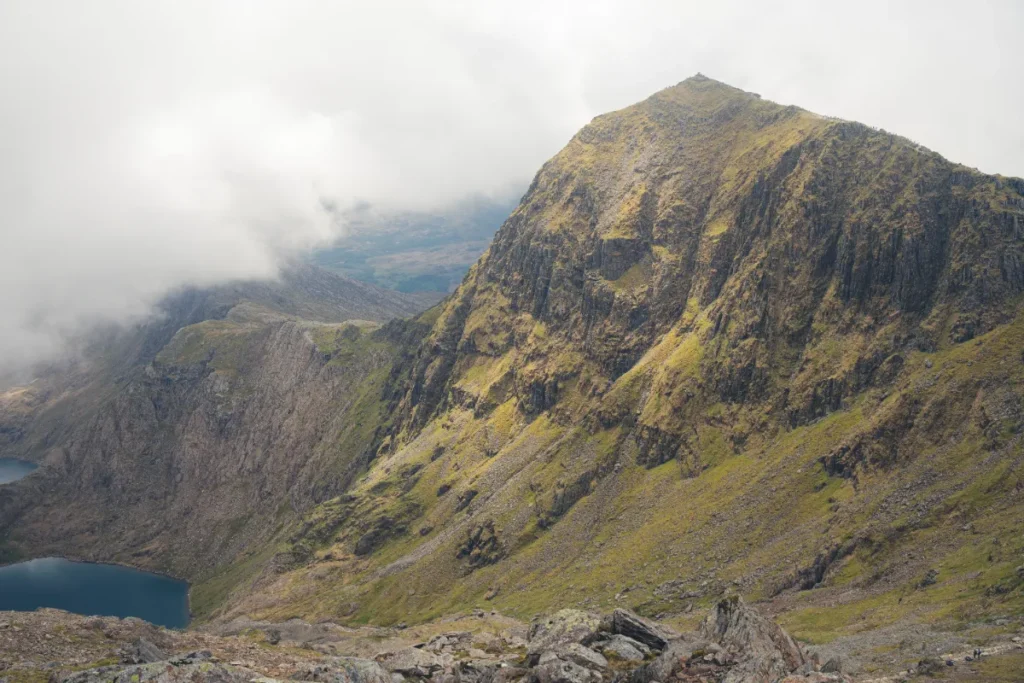
Betws-y-Coed is the one I’d point a first-timer towards, particularly if you’re relying on public transport. Often called the gateway to Snowdonia, it’s a genuinely pretty alpine-style village set in a valley surrounded by forest and waterfalls. It has its own train station on the Conwy Valley Line connecting to Llandudno Junction, and it works as a strong central hub for local buses too. The vibe is outdoorsy and well set up for visitors, with independent cafes, outdoor gear shops, and traditional pubs all within walking distance. Plenty of food options and a good range of accommodation for a village its size.
Llanberis is the right call if climbing Snowdon is the entire point of your trip. It sits right at the foot of the mountain on the shore of Llyn Padarn, and it’s the starting point for the Llanberis Path, the most popular and least technical route up. It’s also home to the Snowdon Mountain Railway, a historic diesel train that’ll take you to the summit if you’d rather not walk. Reachable by a short, direct bus from Bangor station, which makes it genuinely workable without a car.
Beddgelert is the quieter option. A stone-built riverside village deeper into the park, with a slower, more traditional Welsh atmosphere built around stone bridges and walking trails. It’s a stop on the historic Welsh Highland steam railway and sits on the Snowdon Sherpa network, so it’s not cut off, just calmer.
Barmouth suits anyone who wants mountains and coast in the same trip. It sits on the southern edge of the park where the hills meet a vast sandy estuary and the sea, with a proper traditional resort feel, a historic harbour, and good seafood. It’s directly on the Cambrian coastal railway line, so it’s easy to reach without a car.
If you’re a first-timer with Snowdon itself as the main goal, stay as close to the mountain as you reasonably can. If you’re relying entirely on public transport, basing yourself in a larger hub with its own station, Betws-y-Coed or Llanberis, gives you far more flexibility for food and onward travel than a smaller village further out.
How Long to Stay
A weekend gives you Snowdon and one other thing. A week gives you everything on this list and some days to breathe between them. If hiking is the priority, three to four days covers the main mountains without feeling rushed. If you want the mountains, some castles, Portmeirion, and one or two of the other bits, give it five to seven days. The area rewards time and there is no shortage of things to fill it.
Recommened Hikes
Snowdon via the Pyg and Miners Track
The biggest mountain in Wales and the most climbed mountain in Britain. The Pyg Track up and Miners Track down is the combination I’d recommend for a first time, giving you two different routes and genuinely different views for the price of one climb. The summit cafe, the mountain railway appearing at the top, and the British queue for the summit sign are all part of the experience. Full guide here.
Crib Goch
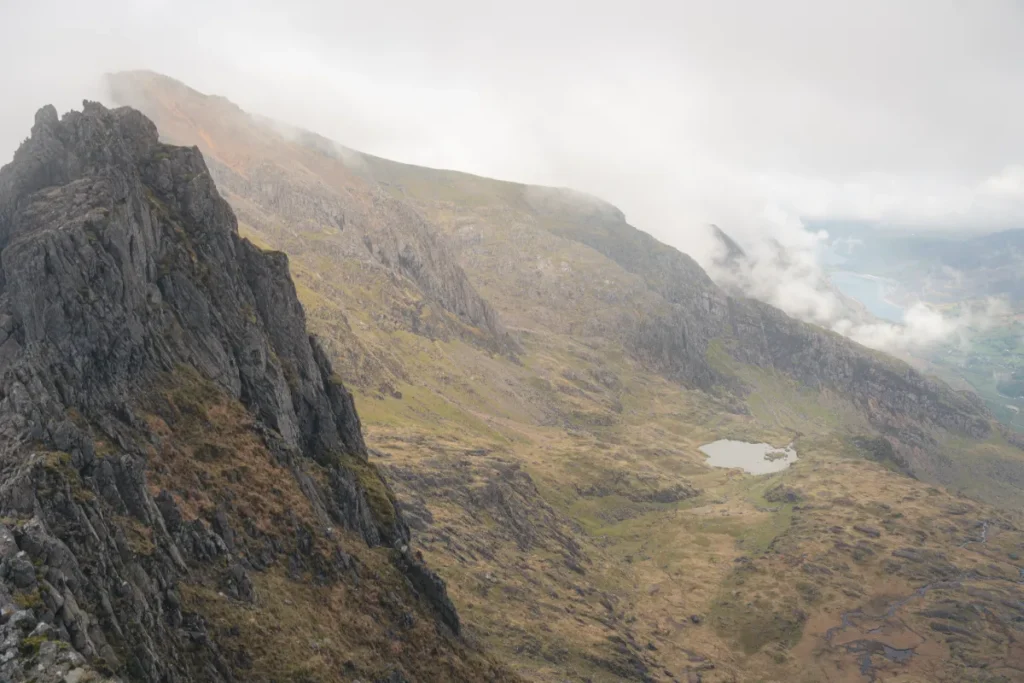
If you want Snowdon with an adventure attached, branch off the Pyg Track onto Crib Goch instead. A grade one scramble along a narrow exposed ridge with 1,000 foot drops either side. Do not do it in the rain. Do it in good weather and it’s one of the best days you can have on a mountain in the UK. Full guide here.
The Snowdon Horseshoe
If you want the maximum amount of action for a day out at Snowdon, the Horseshoe is the best single mountain day in Wales and arguably in the UK. The route takes in Crib Goch, the second highest peak in Wales at Crib y Ddysgl, the Snowdon summit, and the rocky ridge of Y Lliwedd on the way back down to Pen-y-Pass. Around 8 miles with 1,000 metres of ascent. A serious day out that should only be attempted in good conditions. Y Lliwedd gives you more scrambly fun on your descent, rather than the shorter, much less exciting Pyg or Miners track.
Tryfan: North Ridge Scramble
About twenty minutes south of Bethesda along the A5, Tryfan is the mountain I’d say edges Crib Goch for the best day out in Snowdonia. Free roadside parking, a sustained hands-on scramble all the way up the North Ridge, route-finding that keeps you engaged the whole time, and a summit with two standing stones you can jump between if you’re feeling brave. Up the North Ridge, down the South Ridge, never the other way around. Full guide here.

The Glyderau: Glyder Fach and Glyder Fawr
The Glyders sit directly across the Ogwen Valley from Tryfan and are the next natural step once you’ve done the North Ridge. The landscape up here is completely different to anything else in Snowdonia: a strange, lunar plateau of fractured rock formations, including the Cantilever Stone, a slab that juts horizontally out over a cliff and has been photographed with people standing on the end of it for well over a century. On the way up via Cwm Idwal you pass the Devil’s Kitchen, a dark cleft in the cliff face that’s atmospheric even when it’s not trying to be.
The circuit via Cwm Idwal, up through the Devil’s Kitchen to Glyder Fawr, across the plateau to Glyder Fach, and back down Bristly Ridge is around 8 miles and takes 5 to 6 hours. Bristly Ridge is a Grade 1 scramble, not as sustained as Tryfan’s North Ridge but with one or two moves that deserve respect. A brilliant day with far fewer people than Snowdon.
Cadair Idris
At the southern end of the national park near Dolgellau, Cadair Idris sits apart from the main cluster of northern mountains and is better for it. At 893 metres it’s one of the Welsh Three Peaks, and the Minffordd Path route up via Llyn Cau is one of the most dramatic approaches to any mountain in Wales: a horseshoe walk around a glacial lake and up to the summit ridge, with views across to the coast on a clear day.
Welsh legend says that anyone who sleeps on the slopes of Cadair Idris will wake either as a madman or a poet. Most people take the day return option. The Minffordd Path car park is at postcode SY20 9TF, around an hour’s drive south of Betws-y-Coed. The walk takes around 5 to 6 hours for the full circuit.
Pen yr Ole Wen and the Carneddau
The Carneddau range, east of the Ogwen Valley, is the part of Snowdonia most people skip because Tryfan and the Glyders are right there doing something more dramatic. That makes it quieter, and the ridge walking up here is some of the best in the park. Pen yr Ole Wen rises steeply from the end of Llyn Ogwen, a brutally direct ascent that doesn’t ease off until you’re on the summit plateau, and from the top the Carneddau ridge stretches north with views in every direction over the coast and the mountains.
The route up from Llyn Ogwen takes around 2 to 3 hours to the summit. You can extend it north along the ridge to Carnedd Dafydd and Carnedd Llewelyn, the third highest peak in England and Wales, for a proper ridge day. Parking is at the Ogwen Valley car park on the A5, same start point as for Tryfan. Get there early on weekends.
Moel Siabod
An outlier that sits between Betws-y-Coed and the main Snowdon massif, Moel Siabod is one of the more accessible peaks in the park and a good choice if you’re basing yourself in Betws-y-Coed or want something quieter than the main Ogwen Valley crowd. The east ridge route via Daear Ddu has a bit of scrambling near the top and gives good views back over the main Snowdonia peaks. Around 6 miles and 4 hours, starting from Pont Cyfyng near Capel Curig.
Cnicht: The Welsh Matterhorn
Cnicht, near Croesor in the south of the park, has a sharp, pointed summit that looks extraordinary from the surrounding valleys and earns it the nickname the Welsh Matterhorn. The reality from the other side is that it’s a straightforward walk to the top with no technical difficulty, but the views from the summit ridge are genuinely excellent and the crowds are a fraction of anything in the Snowdon area. Around 6 miles from Croesor village, taking 3 to 4 hours. A good option if you’ve done the main peaks and want something new.
The Castles
Snowdonia and the surrounding area has an extraordinary concentration of medieval castles, mostly built by Edward I in the late 13th century as part of his campaign to control Wales. Three of the best are within reasonable driving distance.
Conwy Castle is the one I’d pick first. A UNESCO World Heritage Site with eight massive towers, virtually intact walls, and a position on the Conwy estuary that makes it look like a film set from every angle. Entry is around £13.50 (peak season) for adults through Cadw. The walled town around it, also part of the World Heritage Site, is free to walk.
Caernarfon Castle is the largest and most formidable of Edward’s Welsh castles, and still an extraordinary piece of military architecture. Entry is £15.60 (peak season). The town around it is worth a wander in its own right.
Harlech Castle sits on a rocky crag above Tremadog Bay on the west coast of the park, with views across the sea to the Llŷn Peninsula. Less visited than the northern castles and better for it. Entry is £10.90 (peak season).
If you have an Cadw Explorer Pass it covers all three, plus most other Welsh historic monuments, and saves money quickly across a multi-day trip. At £28 it’s worth getting. https://cadw.gov.wales/visit/places-to-visit/castell-harlech
The Other Things Here
I can’t recommend any of these things as they’re not my cup of tea but they might be something you’re into.
Portmeirion
A deliberately Italian village built on a private peninsula on the west coast of Snowdonia over fifty years by architect Clough Williams-Ellis. Coloured buildings, Italianate colonnades, a central piazza, subtropical gardens, and a hotel. It looks nothing like Wales and everything like somewhere you can’t quite place. Entry is around £20 for adults and covers the village and gardens. Better in the morning before the day visitor coaches arrive.
Zip World
For something completely different, Zip World operates several adventure sites across Snowdonia. The flagship is Velocity 2 at Penrhyn Quarry near Bangor, which holds the record for the fastest zip wire in the world, reaching speeds of up to 100mph over a former slate quarry. Not cheap, but nothing else replicates the experience. Zip World Llechwedd in Blaenau Ffestiniog takes you 500 feet underground into former slate caverns on a variety of caving and underground cycling activities. Zip World Forest in the Conwy Valley is the family-friendly option with treetop nets, a forest coaster, and high ropes.
Surf Snowdonia (Adventure Parc Snowdonia)
An inland artificial surf lagoon in the Conwy Valley producing consistent waves regardless of weather. Surf lessons, bodyboarding, and open surf sessions, along with climbing, caving, and paddle boarding on site. A genuinely unusual thing to find in the middle of mountain country and much better than it sounds. Sessions from around £40 for beginners.
The Ffestiniog and Welsh Highland Railways
Two narrow-gauge steam railways operating through the national park. The Ffestiniog runs from Porthmadog up through the mountains to Blaenau Ffestiniog. The Welsh Highland runs from Caernarfon through Beddgelert and over the passes to Porthmadog. Both are slow, scenic, and an excellent option on a grey day when the summits are in cloud. Return fares from around £25 depending on the route.
The National Slate Museum, Llanberis
Free entry. Housed in the original engineering workshops of Dinorwig Quarry, once the second largest slate quarry in the world. The working machinery, including the original water wheel, is still operational and demonstrated daily. Better than it sounds, and particularly good if you’ve driven past the enormous grey terraces of the quarry on the A4086 and wondered what was going on there.
Wild Swimming
The lakes around Snowdon and the wider park are some of the best wild swimming spots in Wales. Llyn Gwynant near the Watkin Path is one of the most popular, with a National Trust car park and a flat grassy bank. Llyn Padarn in Llanberis is larger and more accessible. Llyn Glaslyn, the lake below the summit of Snowdon at 600 metres, is one for walkers who don’t mind a cold shock at altitude. The water is clear and very cold. A wetsuit is not required but you’ll want one in spring.
Getting Around Once You’re There
The Snowdon Sherpa bus network connects all the main trailheads and towns, with a day ticket costing £7.50, £5 for concessions, or £16 for a family of two adults and three children, giving you unlimited hop-on hop-off travel for the day. Single journeys start from £2, and tickets are bought directly from the driver on board. If you’re doing more than a couple of journeys in a day, the day ticket pays for itself quickly and saves you the hassle of working out individual fares.
This is useful if you’re not driving: park up once at a Park & Ride site, or arrive by train into Bangor or Betws-y-Coed, and let the Sherpa network handle the rest.
Having a car gives you more freedom to explore further afield, the Llŷn Peninsula, Anglesey, the wider coast, without working around bus timetables. If you’re only here for Snowdon itself and a couple of nearby villages, public transport covers it comfortably.
Verdict: UNDERRATED
The best mountain scenery within reach of anyone living in the south of the UK. Plan your base around how you’re getting there, book trains early, and you’ve got a proper weekend in the mountains without flying anywhere. It’s even better than what you’re expecting.