Getting Around London: What It Costs and How to Do It Without Losing Your Mind
London’s transport network is one of the best in the world. It is also very good at quietly draining your account if you don’t know how it works. Here’s everything you need before you tap in for the first time.
The Big Bus Tour: Skip It
You’ll know the Big Bus tour by the people standing at every major tourist hotspot trying to get you on one. That’s your first signal. The hop-on hop-off double decker tours cost around £32 for a day ticket and promise to show you London from the top of an open-air bus, which sounds appealing until you’re sitting in traffic on the Embankment for twenty minutes watching the same view.
London’s tube system is one of the most extensive urban rail networks in the world and it goes directly to every major sight on any Big Bus itinerary, faster, cheaper, and without the sales pitch at the kerb. If you can follow a coloured line on a map and use Google Maps, you can navigate the tube. That’s all it takes.
Learning to use the tube independently is also one of the more transferable skills you’ll pick up on a first London trip. The logic of zone-based metro systems is the same in Paris, Berlin, Tokyo, and New York. Work it out once in London and you’ve worked it out everywhere.
If you get lost or confused at any point, ask a member of tube staff. Every station has them and they’re consistently helpful. There’s no need to pay £45 for someone else to handle the navigation on your behalf.
Forget the Oyster Card
The first thing most guides will tell you is to get an Oyster card. Ignore that advice. Your contactless bank card or phone does exactly the same thing, charges exactly the same price, and saves you the hassle of buying and topping up a separate card. Tap in, tap out, and the system handles everything automatically.
The one exception: if you’re visiting from outside the UK and your card charges foreign transaction fees on every tap, an Oyster card might save you money. Check with your bank before you travel. For most people though, your card or phone is all you need.
The Tube: How It Actually Works
The Underground covers most of central London and stretches out into the suburbs across nine zones. Almost everything a visitor wants to see sits within Zones 1 and 2.
When you arrive at a station, look for the yellow card readers at the gates. Tap your card or phone to get through. When you arrive at your destination, tap out on the readers at those gates too. This is important. If you forget to tap out, the system charges you the maximum possible fare for that journey and doesn’t feel bad about it.
A single pay-as-you-go fare in Zone 1 currently costs £2.90. That adds up fast if you’re making multiple journeys in a day, which is where the daily cap saves you.
The daily cap for Zones 1 and 2 is £8.90. Once your taps reach that total in a single day, every journey after that is free until midnight. You don’t need to do anything to activate it. The system tracks it automatically and stops charging. On a busy sightseeing day where you’re jumping between stops, you’ll usually hit the cap after three or four journeys and travel free for the rest of the afternoon.
There’s also a weekly cap running Monday to Sunday, set at £40.70 for Zones 1 and 2. If you’re in London for a week and moving around a lot, you’ll likely hit this cap automatically without thinking about it.
Peak times to be aware of: morning peak runs from 6:30 to 9:30 Monday to Friday, and evening peak from 4pm to 7pm. Travel outside those windows if you can. Weekends are off-peak all day.
For navigation: Google Maps works perfectly for the Tube. Type in where you want to go, select the transit option, and it’ll tell you which line to take, where to change, and how long it takes. Citymapper is another option that many Londoners prefer, and it does handle some edge cases slightly better, but for straightforward Tube journeys Google Maps is more than good enough.
The Overground: The Underused Alternative
The London Overground is a separate network of surface-level trains running through zones across the city, and it’s worth knowing about because most visitors ignore it entirely.
The stations are bigger and can feel more confusing at first than the compact Tube stops you’ve probably already navigated. They’re also generally less busy, always air conditioned, and tend to have fewer stops between major destinations, which can make them faster on certain routes. If your journey runs along an Overground line, it’s often the better choice.
The bigger advantage: Overground journeys that extend beyond central London are priced on the National Rail system rather than TfL’s zone fares, and that’s where a railcard makes a real difference. Book through the Trainpal app (more on that below), apply your railcard, and a journey that would cost you full price on the Tube can be noticeably cheaper. Worth checking before you default to the Underground.
Trainpal vs Trainline: Why One Is Cheaper
If you’re booking any National Rail train journey in the UK, Trainpal and Trainline are the two main apps people reach for. They look similar. They aren’t.
Trainline is the bigger, better-known platform. It charges a booking fee on top of your ticket and its split-ticket savings tool, called SplitSave, adds a fee on top of whatever it saves you.
Trainpal charges no booking fee and applies split ticketing automatically, finding combinations of cheaper tickets for different segments of the same journey that together cost less than a standard single ticket. You stay on the same train throughout. You just pay less for it. Trainpal consistently comes out as the cheapest option for split tickets in the UK.
The only thing to know going in: the app looks like it was designed in a parallel universe where Aliexpress and Temu handle UI. Expect game-style reward animations, PalPoints that accumulate with each booking, and a general aesthetic that doesn’t exactly scream premium. It’s fine. Look past it, use the app for the prices, and move on.
A railcard applied through Trainpal on an eligible National Rail journey gives you a third off. Keep reading for more on railcards.
The Bus: Cheap, Slow, Scenic
London’s buses cover the entire city and cost £1.75 per journey, a flat fare regardless of distance. No zones, no complications. Tap on when you board, don’t bother tapping off.
The bus daily cap sits at £5.25, meaning four journeys and the rest of the day is free. For a day of pottering around on buses, that’s excellent value.
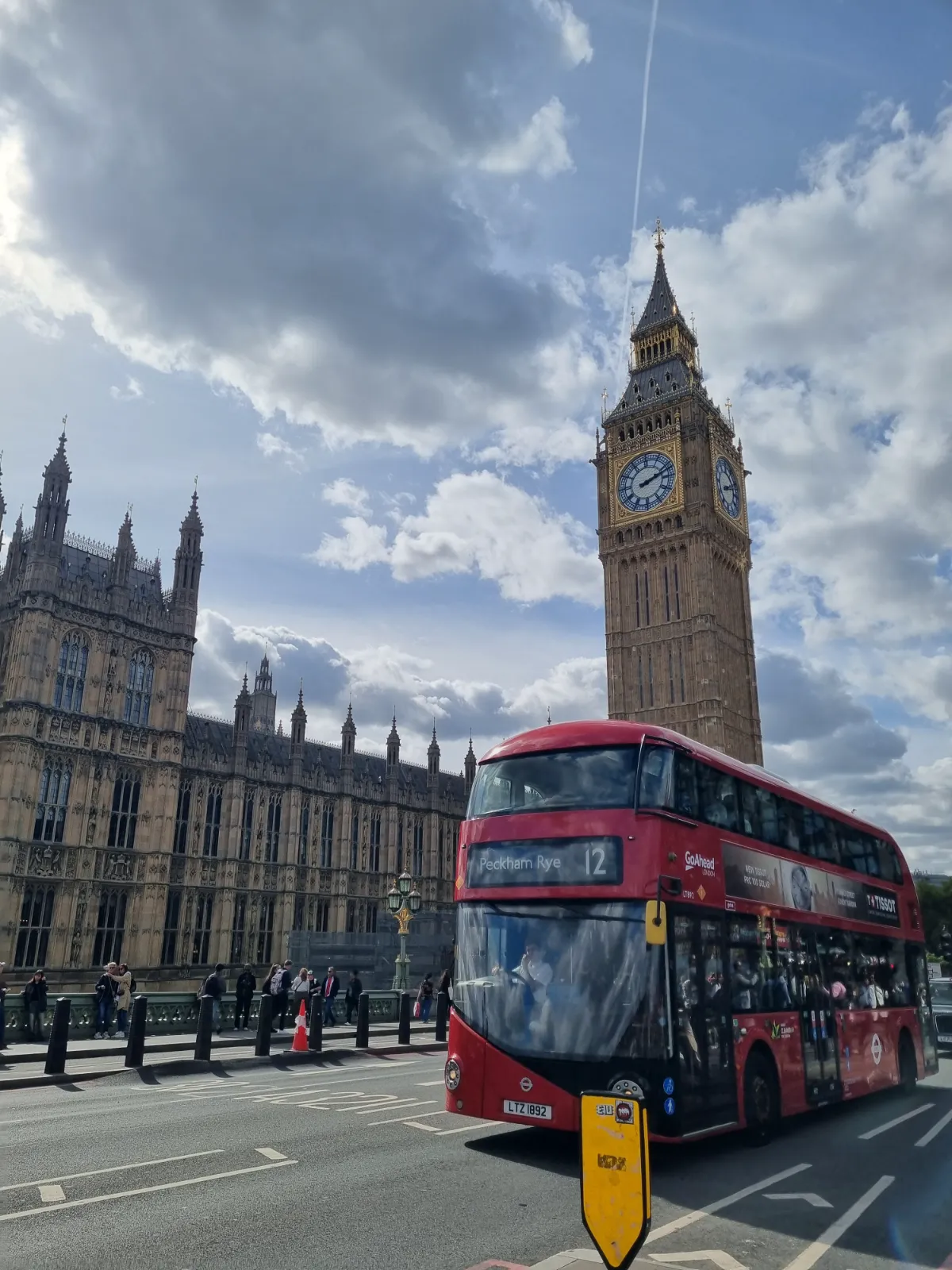
The catch is speed. Buses in London are subject to London traffic, which is a polite way of saying that in peak hours you will sometimes cover one mile in twenty minutes while watching cyclists overtake you. For getting somewhere at a specific time, take the Tube. For a relaxed journey where you want to see the city, the bus is a genuinely enjoyable way to travel. The top deck of a red double-decker through central London is one of the better free experiences the city offers.
Both Google Maps and Citymapper handle bus routes well. Citymapper has a slight edge on live departure times and disruption alerts. Either works fine.
Bikes: Docked and Dockless
London has two very different ways to hire a bike, and they suit different types of journey.
Santander Cycles: The Hire Bikes
London’s public bike hire scheme runs across 800 docking stations and over 12,000 bikes throughout the city. You’ll spot the red bikes everywhere. They’re known by most Londoners as Boris Bikes, after the former mayor who introduced them, despite the scheme now being sponsored by Santander and Boris Johnson being very much a historical figure.
Hiring one is straightforward. Turn up at any docking station, tap your contactless card or use the Santander Cycles app, release a bike, ride it where you need to go, and return it to any docking station at the other end.
Costs:
- Single hire (standard bike): £1.65 for 30 minutes, then £1.65 per additional 30 minutes
- Day Pass: £3 for 24 hours of unlimited one-hour rides
- E-bikes: £3 for 30 minutes per single hire
The Day Pass at £3 is the best value if you’re planning to use the bikes more than once. Take a bike, dock it within an hour, take another one, dock it, repeat. As long as each leg is under an hour, the Day Pass covers everything.
A few things worth knowing: helmets are not provided, so bring your own if you have one. The bikes are heavy and built for comfort rather than speed. You need to be over 18 to hire and over 14 to ride. And if you forget to return the bike within 24 hours, the lost bike charge is £300. Return the bike.
For routes and docking station locations, the Santander Cycles app shows availability in real time, or Google Maps and Citymapper both display docking stations when you zoom in.
Dockless E-Bikes: Lime, Forest, and Tier
If there’s no Santander docking station nearby, or you want an electric option with more flexibility, dockless e-bikes are worth knowing about. Lime, Forest, and Tier all operate across parts of London, and the model is simpler than the docked scheme: find a bike on the app, scan it to unlock, ride it, and leave it at your destination. No docking station required.
Lime is the most widely available of the three and covers a large chunk of inner and outer London. Pricing is typically around £1 to unlock and then a per-minute rate on top, which makes short trips cheap and longer ones add up faster than you’d expect. The Lime app shows you exactly where available bikes are and lets you reserve one before you walk to it.
Forest operates across several London boroughs and positions itself as the greener option as the company plants a tree for every ride. Pricing is similar to Lime, with unlock fees and per-minute rates varying slightly by area. Worth checking if you’re in one of their zones.
Tier covers parts of outer London and is worth a look if Lime and Forest don’t show availability where you are. Same unlock-and-ride model, comparable pricing.
A few things that apply to all three: you need to be 18 or over, helmets aren’t provided, and you’re expected to park the bike responsibly rather than dumping it across a pavement. Each operator has geofenced zones where you can and can’t end a ride, so check the app before you stop. All three apps also show e-scooters where they’re operating, though scooter rules in London are worth reading separately before you ride.
For finding bikes across all operators at once, Citymapper aggregates availability from multiple providers in one place, which saves switching between apps. Beware biking can seem like the cheaper option, however in reality, it can take more effort to mess around with the app and if you’re not careful, add up to cost much more than the tube.
Black Cabs: Iconic, Expensive, Occasionally Worth It
The black cab is one of London’s most recognisable sights and one of its most expensive ways to get anywhere. London cab drivers are required to pass The Knowledge, a famously demanding test of every street and landmark in the city, which makes them excellent navigators. It also makes a cab ride considerably pricier than alternatives.
Fares are regulated by TfL and metered, so what you see on the meter is what you pay. The minimum fare is £4.20, covering roughly the first 161 metres or 35 seconds of travel. After that, the meter runs based on a combination of distance and time. In traffic, the time element keeps ticking even when you’re stationary, which is how a two-mile journey through central London can comfortably reach £20.
Typical fares to expect:
- 1 mile journey: £8 to £13
- 2 mile journey: £12 to £20
- 4 mile journey: £21 to £30
- Heathrow to central London: £64 to £120 depending on time and traffic
Night rates (Tariff 2 from 8pm to 10pm, Tariff 3 from 10pm to 5am) are higher than daytime fares.
Hail a black cab by raising your arm when the orange light on the roof is lit. All black cabs accept contactless payment. For a budget traveller, a black cab is rarely the right call. For a late night when the Tube has stopped, a group splitting the fare, or an airport run with a lot of luggage, it becomes a different calculation.
Uber and Bolt operate widely across London if you want app-based private hire at lower prices than a black cab. Both are reliable and worth having on your phone.
If You’re Here for Longer: Get a Railcard
If you’re spending more than a week or two in London, or planning to travel around the UK, a railcard is worth having. Both cost £35 for a year and give you a third off most rail fares.
16-25 Railcard: Available to anyone aged 16 to 25. Costs £35 for one year or £80 for three years. Buy it through Trainpal.
There’s a trick here worth knowing. You can buy or renew a 1-year 16-25 Railcard up to and including the day before your 26th birthday, and it remains valid until its expiry date one year later. Renew it on the last day you’re eligible and it runs until you’re 27.
26-30 Railcard: Available to anyone aged 26 to 30, costs £35 a year, the same third off rail fares. Digital only, lives on your phone via the Railcard app. Buy it through Trainpal.
Renew your 26-30 Railcard on the last day of your 30th year and it covers you until you’re 31. Combined with the 16-25 trick above, you can stretch discounted rail travel from age 16 all the way to 32 if you time the renewals right.
One note: on weekday mornings between 4:30 and 10:00, a minimum fare of £12 applies with a railcard on most National Rail journeys. At weekends, on bank holidays, and during July and August, there’s no minimum fare.
Quick Cost Summary
| Cost | |
|---|---|
| Single Tube fare (Zones 1-2) | £2.90 |
| Daily Tube cap (Zones 1-2) | £8.90 |
| Weekly Tube cap (Zones 1-2) | £40.70 |
| Single bus fare | £1.75 |
| Daily bus cap | £5.25 |
| Santander Cycle single hire | £1.65 / 30 mins |
| Santander Cycles Day Pass | £3 |
| Lime / Forest / Tier e-bikes | ~£1 unlock + per min |
| Black cab minimum fare | £4.20 |
| 16-25 or 26-30 Railcard | £35/year |
No Oyster card needed. Contactless bank card or phone, tap in, tap out, and the system caps everything automatically.
One final tip: every person travelling needs their own separate contactless device. You cannot tap two people through on the same card, and trying to do so will result in penalty fares for both. Each person taps independently.