Uffington White Horse: Oxfordshire’s Best Sight (Which Isn’t Saying Much)
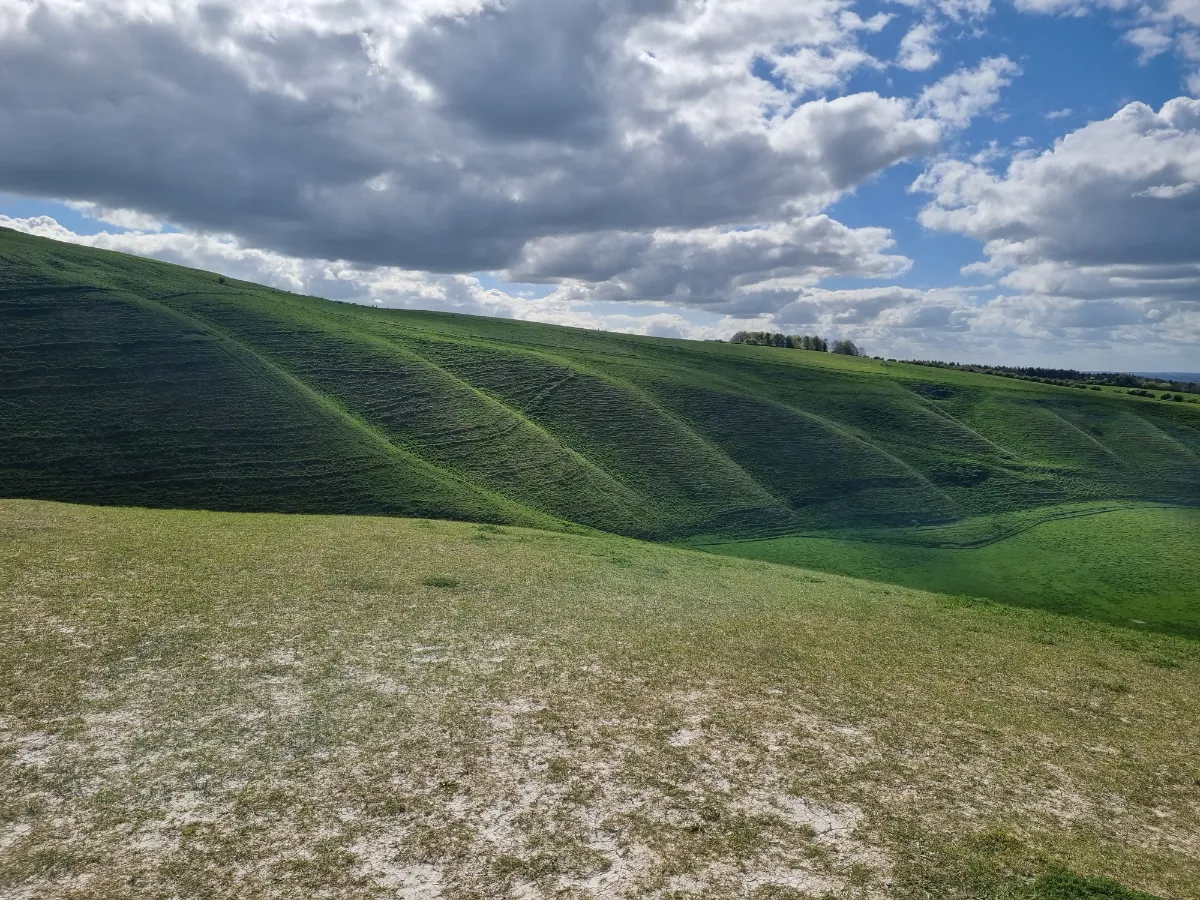
Oxfordshire isn’t exactly falling over itself with things to see. Rolling countryside, a few market towns, and a general sense that not a lot has happened here since the Iron Age. Which, as it turns out, is precisely why Uffington White Horse stands out so well. In the flattest, most unremarkable county in England, someone 3,000 years ago carved a 110-metre horse into a chalk hillside, and it remains the most interesting thing for miles in any direction.
That’s a compliment. Just not a huge one.
What It Actually Is
The Uffington White Horse is a Bronze Age geoglyph carved into the hillside, with the first written record of it dating back to the 1070s. Nobody knows exactly why it was made or what it represented, which makes it more interesting, not less. Its abstract shape, with a distinctive beaked head, resembles images of horses found on ancient British coins, suggesting it meant something beyond decoration. What exactly, nobody agrees on.
The hill it sits on is also surrounded by enough ancient history to fill a decent afternoon. Dragon Hill sits directly below, a small natural mound where, according to local legend, St George slew the dragon. The bare patch of chalk on top where supposedly nothing has ever grown since is a nice touch. Above the horse sits Uffington Castle, which sounds considerably more exciting than it is.
What You’ll Actually See on the Ground
Here’s the catch, and it’s a significant one: you can’t really see the horse from the ground. I walked up to it, stood next to the chalk trenches, and saw chalk trenches. The carving was deliberately placed to be extremely difficult to see from close quarters, and like most geoglyphs it’s best appreciated from the air. You can actually see it more clearly from the B4507 road below, or even from Faringdon Folly several miles away. The aerial photos you’ve seen online are the real thing. Standing on the hill, you’ll need some imagination.
What you do get from up there is the landscape itself, and that’s the best part. The hills ripple and fold in a way that feels almost alive, chalk downs rolling off in every direction with that particular wide, breezy emptiness you only really get in this part of England. On a good day it’s properly beautiful. On a bad day it’s properly bleak. Either way it gets under your skin.
Uffington Castle sits just above the horse, an Iron Age hillfort that in practice means a dry moat circling a large flat patch of grass. Bring your imagination, because there’s nothing else. It’s free to walk around and takes about ten minutes.
Dragon Hill is a small grassy mound at the base. Worth a look mostly for the legend. Takes three minutes.

Wayland’s Smithy, If You’re Already There
About a mile west along the Ridgeway sits Wayland’s Smithy, a Neolithic chambered long barrow. The legend attached to it is decent: leave your horse overnight along with a few pennies and it’ll be reshod by morning. People still leave coins in the cracks of the stones today.
In practice, you can’t really get in or properly see inside the chamber. You’ll see large stones, a vague sense of structure, and that’s about it. Worth the extra walk only because you’re already out there and it costs nothing but 20 minutes. Don’t go in expecting more than that.
Parking and Getting There
The main car park is the National Trust site right at White Horse Hill, postcode SN7 7QJ, signed off the B4507 between Ashbury and Wantage.
Parking costs £2 for up to two hours or £4 for the day, payable by cash or app. National Trust members park free by scanning their card at the machine. Blue Badge holders also park free. Two hours is plenty unless you’re walking out to Wayland’s Smithy and back, in which case give yourself a full afternoon and pay the £4.
There’s no proper free street parking at the main site. There’s a small verge off an unnamed lane on the B4507 a little west of the main car park where a few cars can fit, useful if you’re heading straight to Wayland’s Smithy rather than the horse. Don’t bank on it being available.
Public transport isn’t really an option. The nearest train station is Swindon, about 13 miles away, with no useful bus connections onward. You need a car for this one.
One practical note: there are no toilets at the site or car park. The nearest are in the village of Uffington a few miles away. Plan accordingly.
The truth
If you’re in the area, go. The landscape alone earns the visit, and the White Horse carries a certain inexplicable weight even when you can’t quite see it properly. Just don’t expect the ground-level view to match the photos. It won’t.
Verdict: RATED
Mostly because there isn’t a lot else competing for your time in Oxfordshire. The hills are the real reason to come. The horse is the excuse.