The Parma Food Tour: Cheese, Ham, and the Best Balsamic I’ve Ever Had
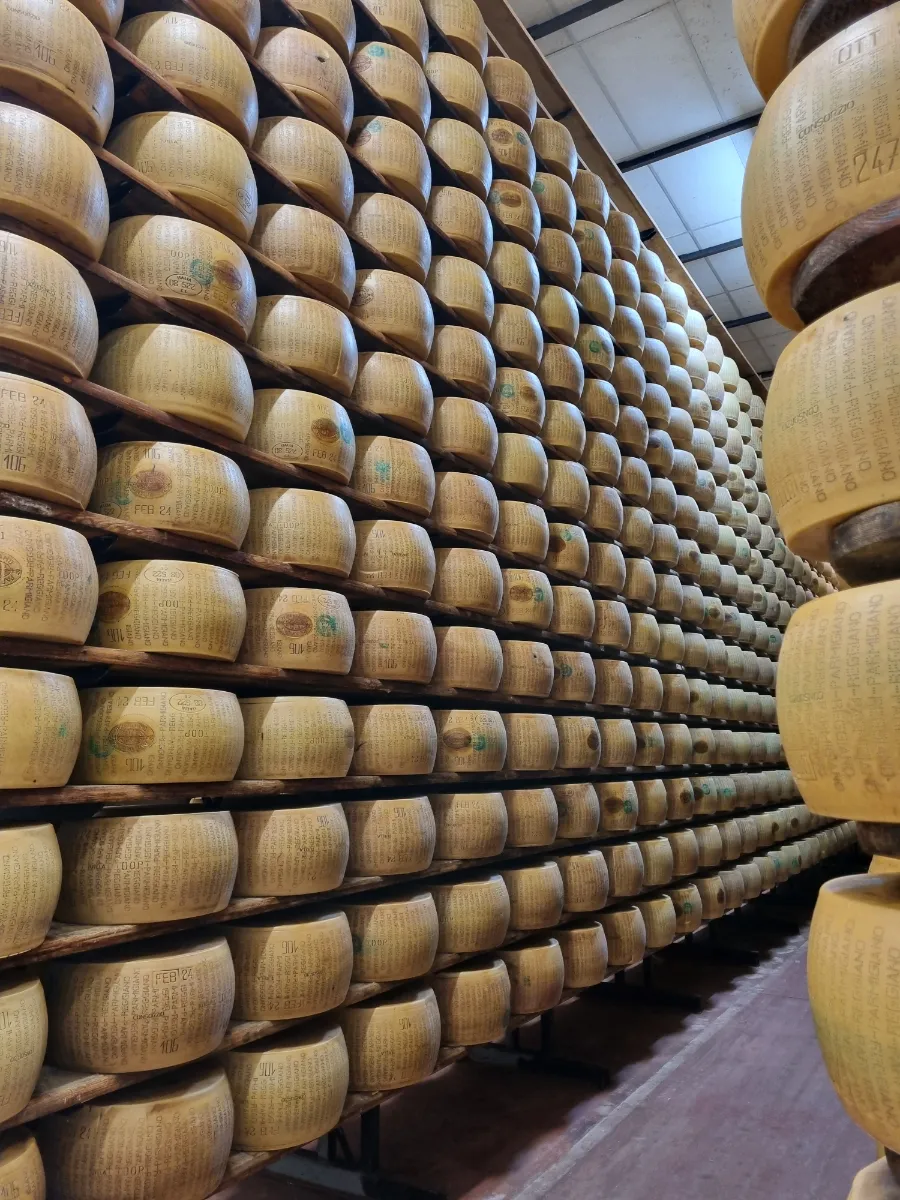
Prosciutto di Parma and Parmigiano Reggiano carry this region’s identity, and the food tour through the surrounding countryside is the single best thing to do here. This is the real reason to come.
Book It, Don’t DIY It
I tried arranging visits to the cheese, ham, and balsamic producers myself first, since I almost always travel solo and prefer doing things independently to do things I my own pace and at a budget. It didn’t work. The producers are scattered across the countryside outside both Parma and Modena, getting between them without a car is difficult and expensive, and lining up the right opening times with only a single day available was more hassle than it was worth. I booked through GetYourGuide instead. Some things are worth an expert organising.
That turned out to be the right call by a wide margin. Being driven privately between producers, with someone who knows the right people and the right timing, made the whole day feel considered rather than a logistical scramble.
I booked the cheese and ham tour and added the balsamic vinegar tour on top, since it wasn’t much more on top of the base price and I didn’t want to come back another time just for that. Full day tours covering all three run from around £130 to £150 per person, with the half-day cheese and ham only options coming in noticeably cheaper. Most tours pick up directly from the train station, so it’s worth staying somewhere close to that if you’re catching an early start.
Parmigiano Reggiano
We started at a family-run dairy and watched the entire process from start to finish: the milk, the curdling, the moulding, right through to towering columns of wheels stacked floor to ceiling in the aging rooms. It takes a staggering 550 liters of fresh milk just to make a single wheel of Parmigiano Reggiano, a process orchestrated by the head casaro (master cheesemaker) who relies purely on sight, touch, and tradition rather than modern machinery.
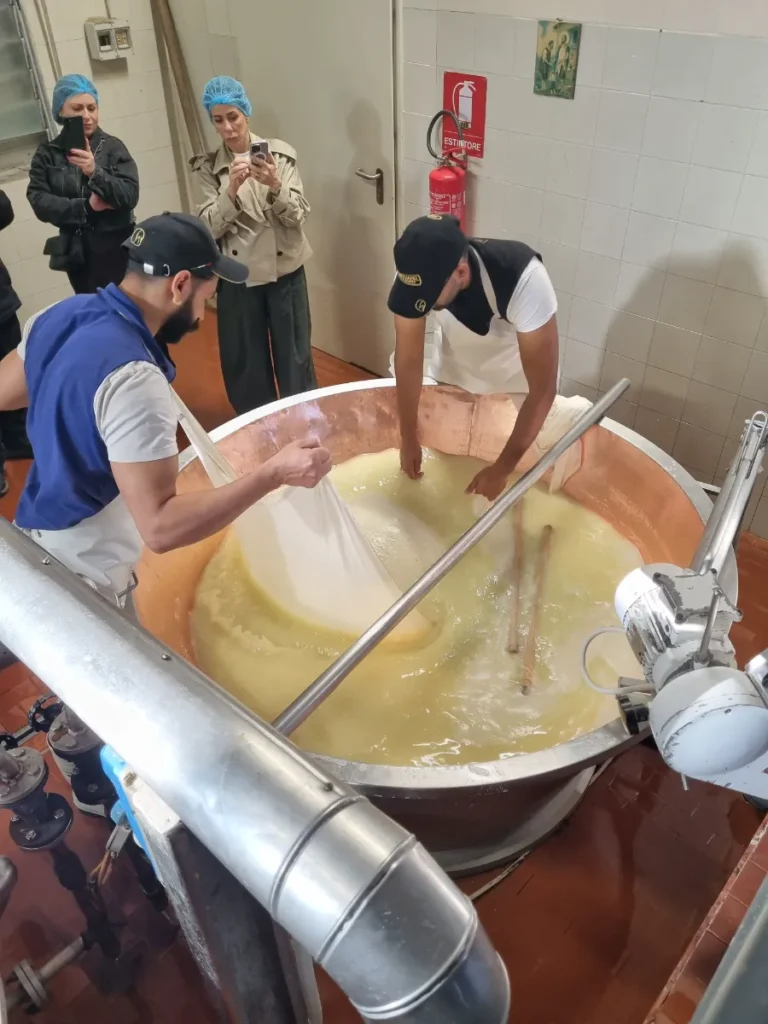
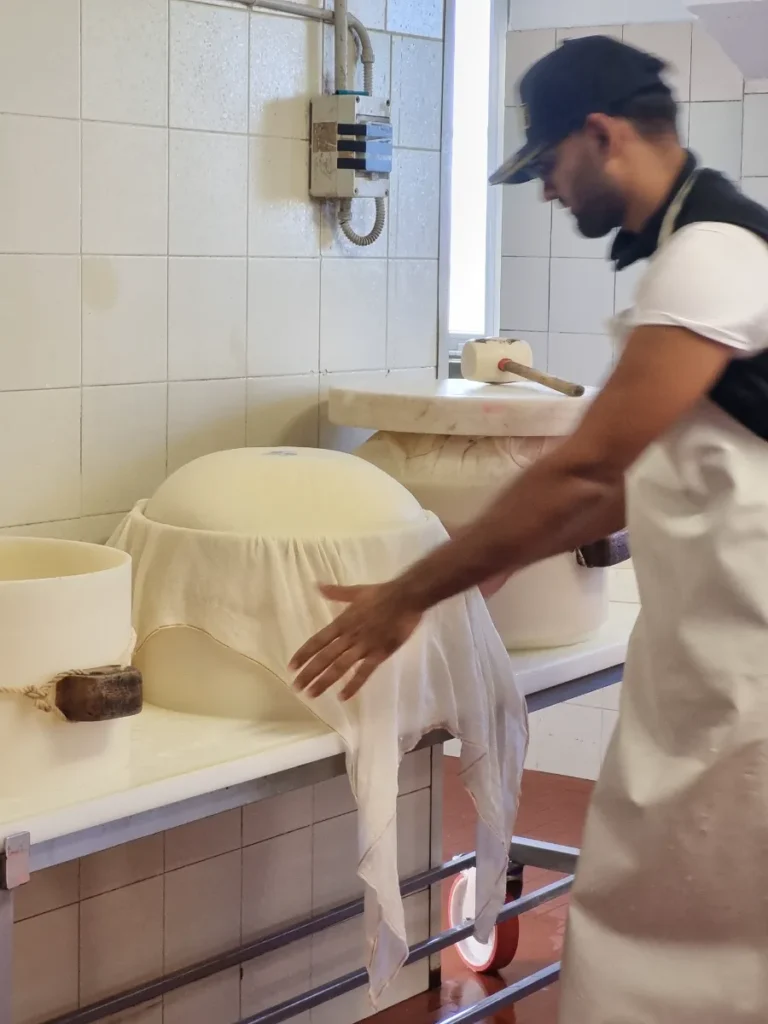
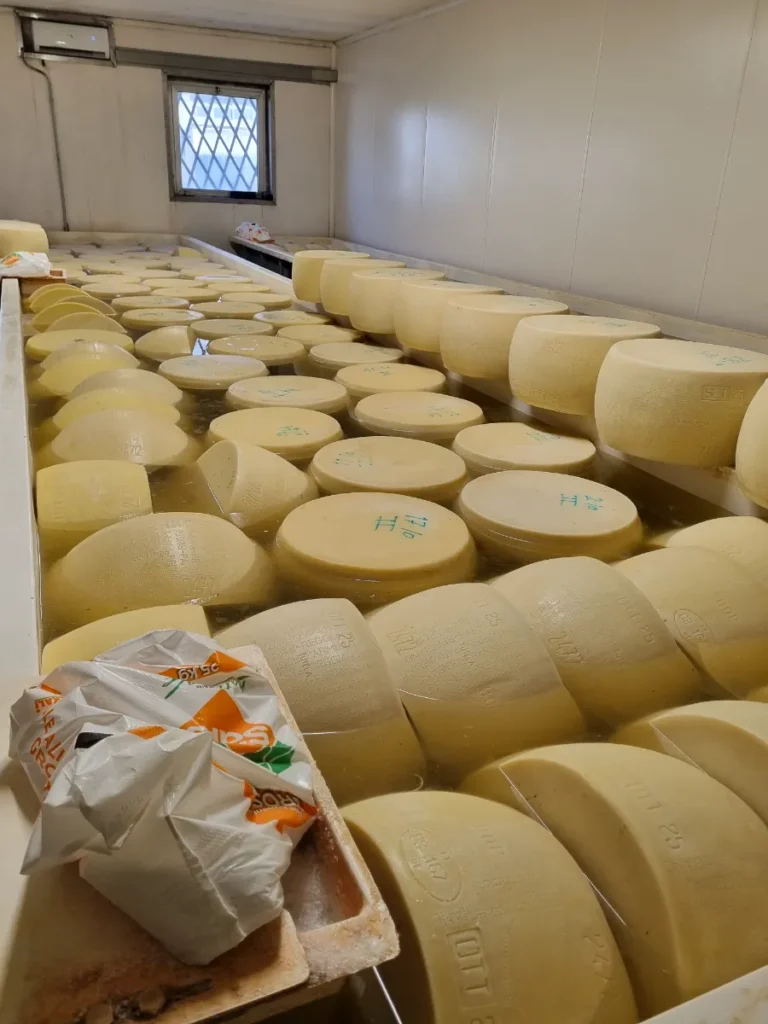
Once the curds are lifted in massive linen cloths and pressed into their circular moulds, they enter the quiet, cavernous aging rooms. This is where the magic—and the strict scrutiny—happens. Inspectors from the consortium come through tapping each wheel with a special silver hammer, listening intently to the resonance to check for internal air pockets or flaws before it earns the official fire-branded Parmigiano Reggiano stamp. Seeing that level of craftsmanship explained in person changes how you think about every block you’ve ever bought in a supermarket.
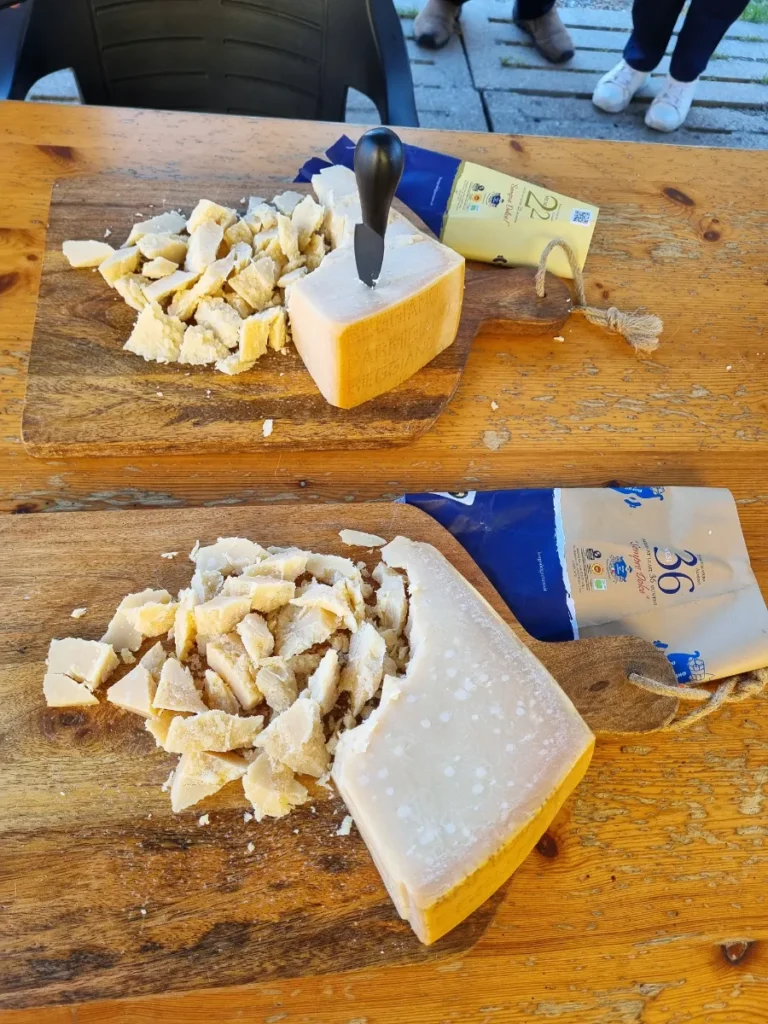
Then came the tasting, which was essentially unlimited. They laid out cheese aged 22 months alongside blocks aged 36 months, beautifully paired with local red and white wine. The difference between the two ages is genuinely noticeable. While the 22-month is versatile, creamy, and dynamic, the 36-month shifts into something completely different. It develops an incredible depth of flavor and a distinct, crystalline texture that the younger cheese doesn’t have. Those little white, crunchy bits aren’t salt—they are tyrosine crystals, safe clusters of amino acids that form naturally as the proteins break down over years of aging. It was a truly special experience, eating such sublime cheese right outside the very rooms where it was made.
Prosciutto di Parma
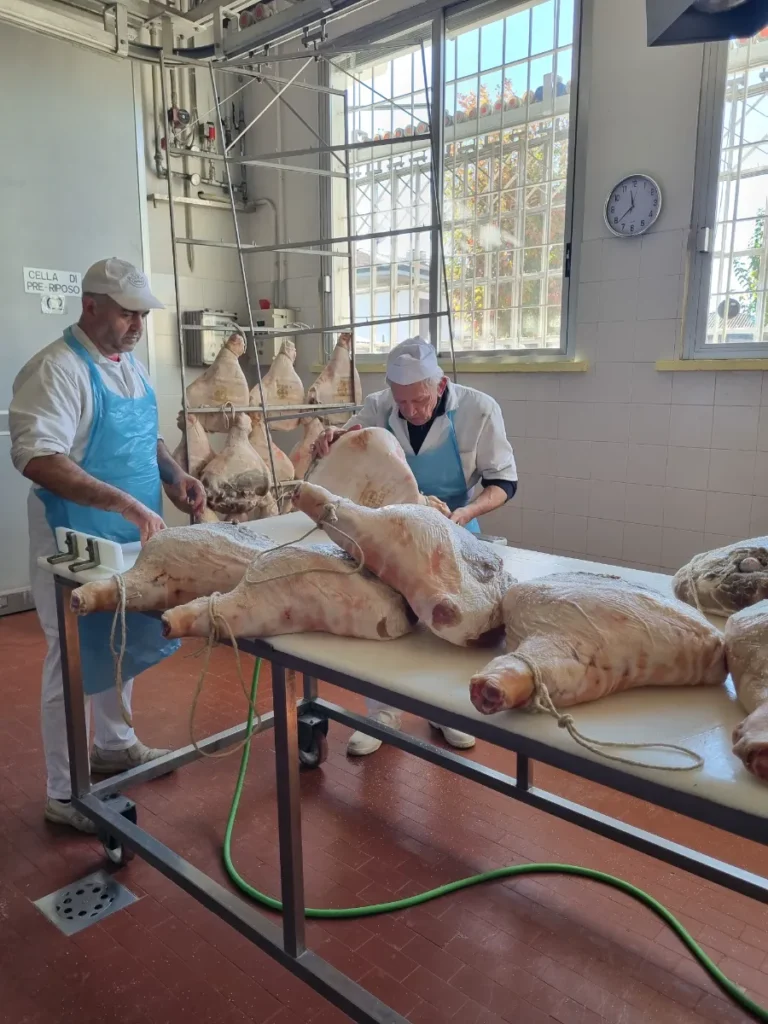
Next came the ham producer, where the 90-year-old owner who’d clearly been doing this his entire life walked us through the salting process from raw leg to finished product. Watching someone with that much experience handle the meat, then shave off paper-thin slices for us right there, was a proper highlight of the day. We ate copious amounts of it with fresh bread and more wine, and there’s no version of supermarket prosciutto that comes close.
Hearing him talk about the timeline really puts that quality into perspective. This isn’t something you rush; the entire process takes a minimum of 14 months, and some of their finest legs are cured for up to three years. It’s a massive investment of time and patience, all regulated under strict DOP (Denominazione di Origine Protetta) laws. That protected status is essentially a guarantee that every single stage—from the specific Italian pig breeds used, to the sea-salt-only curing process, down to the final branding with the famous ducal crown logo—happened right here in the Parma region.
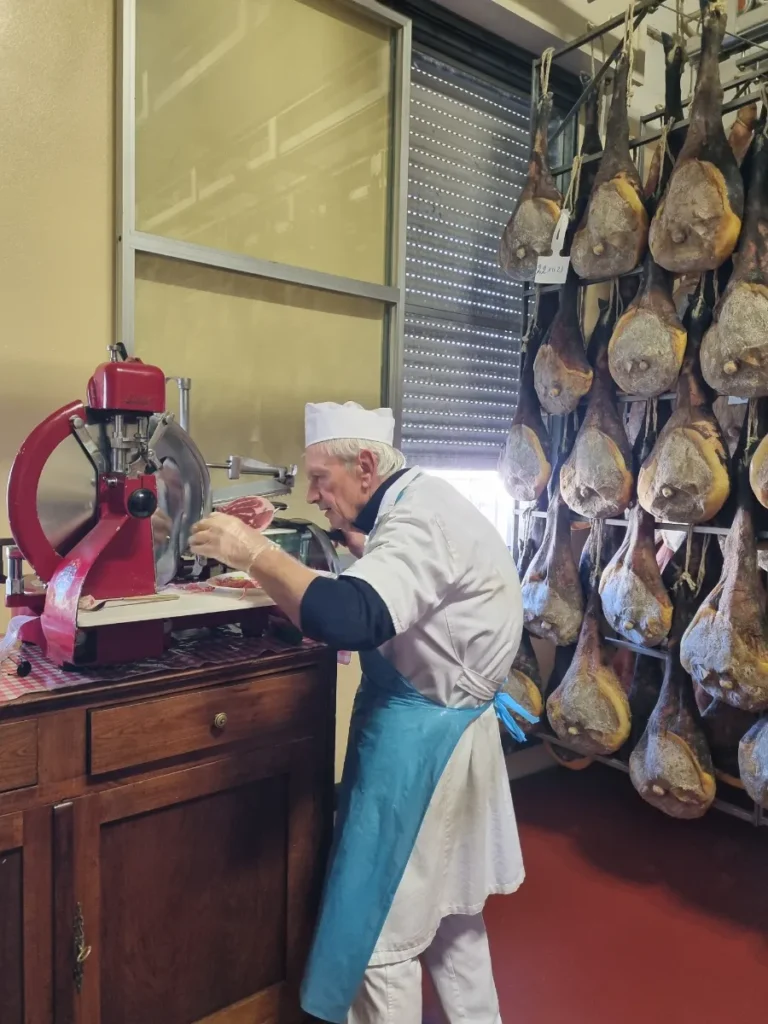
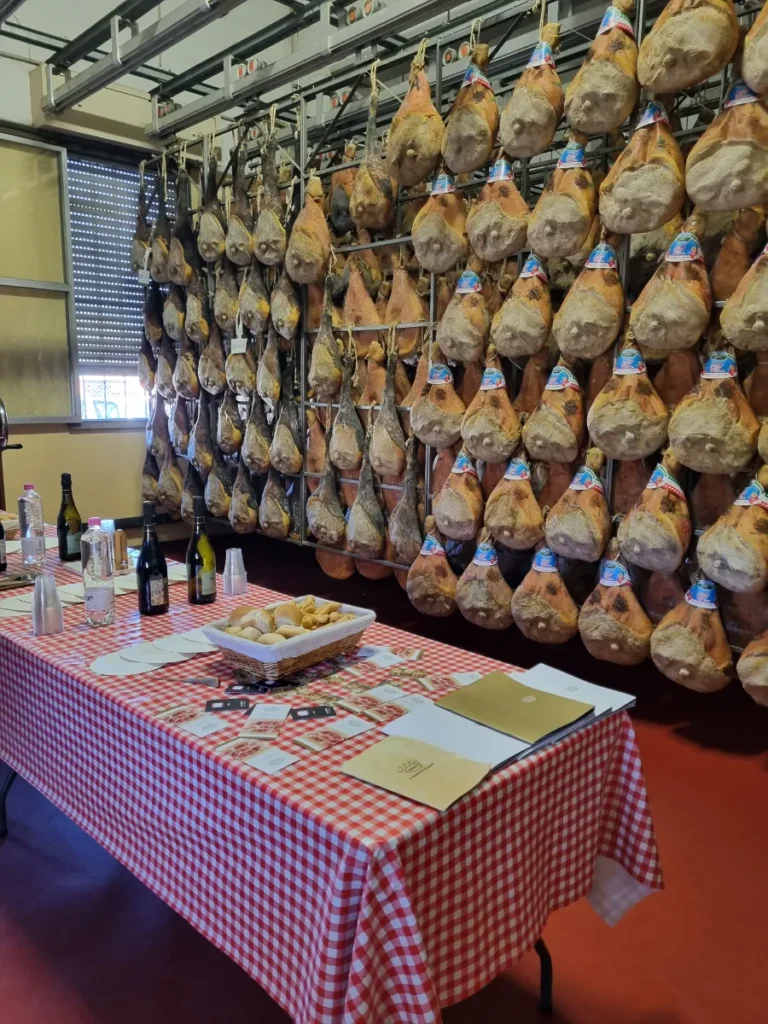
That distinction is exactly why there’s such a massive leap between standard prosciutto and true Prosciutto di Parma. In Italian, “prosciutto” simply means ham, and the basic stuff you find in most supermarkets can come from anywhere, often loaded with nitrites, nitrates, and artificial preservatives to speed things up. True Prosciutto di Parma uses absolutely zero chemical additives—just pork, sea salt, air, and time. Tasting it at the source, you can literally taste the difference that patience makes; it’s incredibly sweet, buttery, and melts the second it hits your tongue.
Balsamic Vinegar of Modena
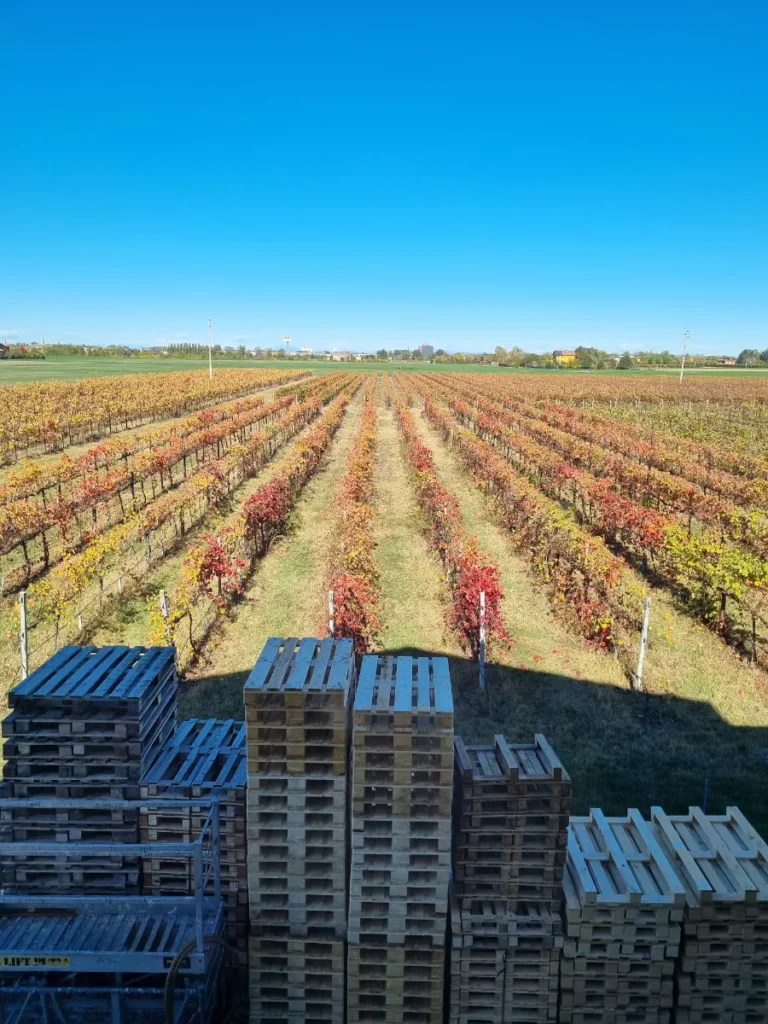
I added the balsamic stop almost as an afterthought, since I don’t really use the stuff at home. I was wrong to be lukewarm about it.
The real thing carries the DOP mark and is called Aceto Balsamico Tradizionale di Modena, and it bears almost no relationship to the thin, vinegary stuff sold in most supermarkets. We walked through the vineyard, then into the aging rooms, where barrels of grape must sit ageing for up to 25 years, getting smaller and more concentrated as they move between progressively smaller wooden casks. Seeing how tiny the final volume of liquid is after all that time was honestly incredible, years of patience reduced to a few small bottles.
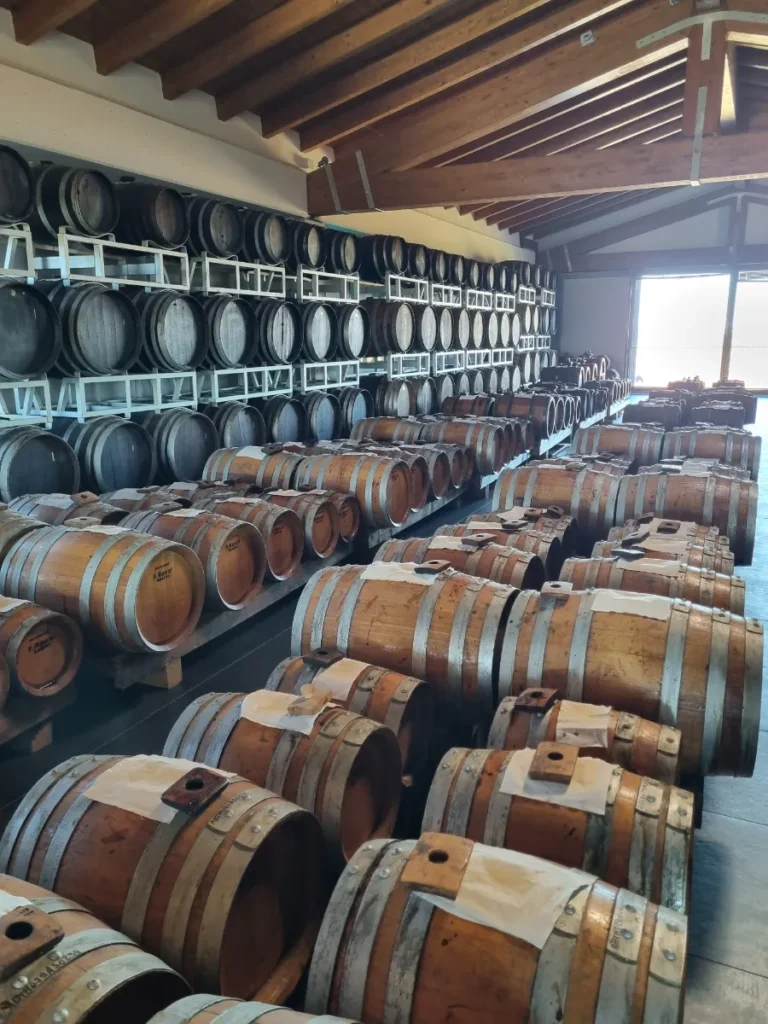
Then the tasting. I genuinely don’t have the vocabulary to describe properly aged balsamic. It’s rich, complex, almost syrupy, nothing like vinegar in the way most people understand the word. We also tried some of the more modern infused versions, garlic, mustard, both delicious in a completely different way to the traditional stuff.
What stole the entire show was tasting the 25 year aged balsamic on its own. And then, somewhat unexpectedly, on vanilla ice cream. I wouldn’t have thought to put the two together in a hundred years, and it worked brilliantly.
The Bottom Line
This is the reason to come to this part of Italy. Book a proper tour rather than trying to wing it solo, give yourself the whole day, and don’t skip the balsamic just because you don’t normally cook with it at home. The cheese, the ham, and that 25 year aged balsamic earn every penny.
When you’re done with the tour, check out my guide to how to spend your time in the city of Parma here.
Verdict: RATED
The food tour is unmissable. Book it through GetYourGuide, do all three stops, and the balsamic in particular will surprise you.