Hiking Boots: Don’t Skimp Here
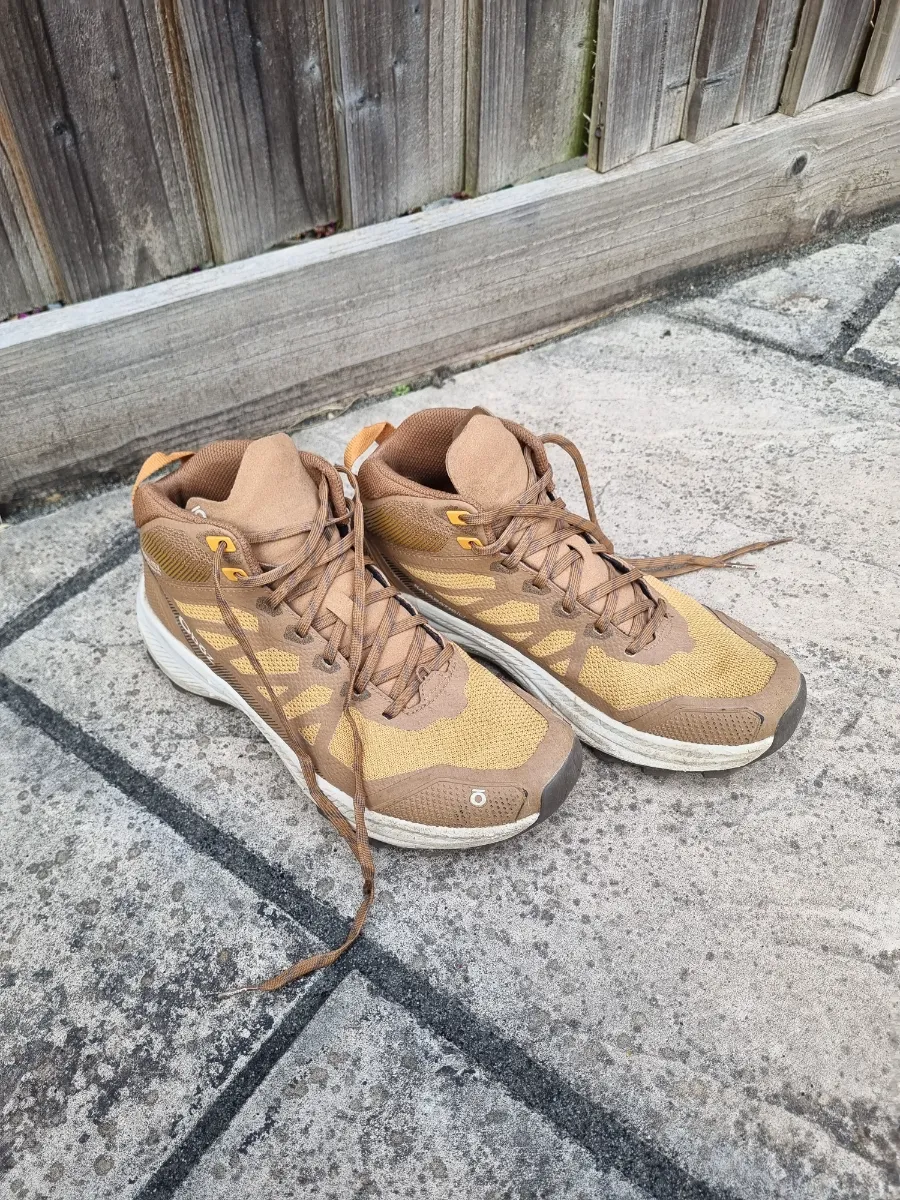
Boots are the one piece of kit where cutting corners costs you more than money. A bad pack is uncomfortable. A bad jacket gets you wet. Bad boots will ruin your trip, damage your feet, and potentially put you in real difficulty on difficult terrain. Buy well once and you’ll forget they’re even on your feet. Buy badly and you’ll be thinking about them with every step.
Here’s what I’ve learnt across thousands of miles in two pairs, and what I’d actually spend money on if buying again today.
My Current Boots: Oboz Katabatic LT Mid GTX — £170
The Katabatic LT Mid GTX sits in an interesting middle ground between traditional hiking boot and trail runner. Lighter than most boots at this height, Gore-Tex lined, with a synthetic recycled mesh upper and welded TPU overlays for structure without bulk. It feels and performs more like a fast hiking shoe than a stiff traditional boot, which suits the way I hike.
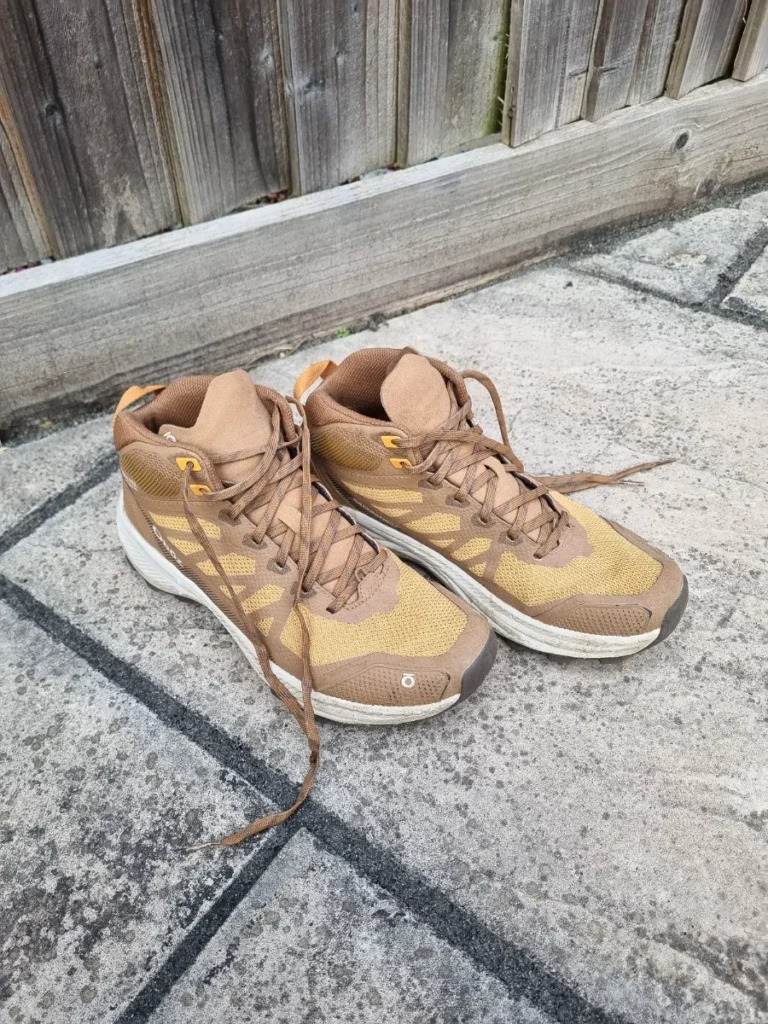
The issues: they run warm. The mesh looks like it should breathe freely. In practice, heat builds up more than you’d expect, particularly on a long push in warmer conditions. The waterproofing holds up well in the kind of weather you’d normally encounter, though in sustained serious wet they’re not bombproof.
Heel slip has also been a minor annoyance. Laced noticeably tighter than previous boots to stop the heel lifting, which shifts more pressure to the forefoot over a long day. Not a dealbreaker. Worth knowing before you buy but these sort of issues are personal to the wearer. I have noticed that possibly due to the heel slip there’s premature wear on the inner heel material.
The LT designation is recent and represents a real upgrade over the original Katabatic, with improved fit, better components, and a move to Gore-Tex Invisible Fit technology which is lighter and more breathable than the previous lining.
At £170, they’re not cheap. Worth it if the lighter, faster hiking shoe profile suits how you move. Admittedly the reason why I own a pair is because I found a good deal at £40.
The Boots I’d Buy Again: Keen Targhee IV Mid
Before the Oboz I put 2,000 miles into the Keen Targhee Mid III. They were the right height, fast to lace, reasonably light, and had a proper leather upper with enough stiffness in the sole to carry a heavy pack without your feet paying for it by evening. The tread lasted well. They suited my foot from day one and never gave me a serious problem across all that mileage.
The waterproofing wasn’t perfect in sustained wet conditions. Leather dries out slower than synthetic but holds up better across heavy use. That trade-off worked in my favour over the long run.
If buying tomorrow: the Keen Targhee IV Mid. Same proven last, updated materials. Around £140 to £160. That’s where I’d start.
Boots are deeply personal. What works brilliantly for one foot shape will cause problems for another. There’s no universal right answer, and anyone telling you there is probably works in a shop. What I can say is that the Targhee has worked better for me across more miles than anything else I’ve tried, and I’d go back to it without much deliberation.
What to Actually Look For
Fit Is Everything
A boot with mediocre waterproofing that fits your foot is better than the most technical boot on the market that pinches your toes on the descent. Full stop.
You can rule out obvious problems in a shop. You won’t know how a boot truly fits until you’ve put real miles on it. That’s the reality. What you can check:
- Toe box: enough room that your toes don’t hit the front going downhill. A thumb’s width between your longest toe and the end of the boot.
- Width: your foot shouldn’t be squeezed laterally. Blisters from width problems are miserable and they don’t ease off mid-hike.
- Heel lift: a few millimetres is fine. Consistent heel slip means the boot is wrong for your foot shape, not something lacing will fix permanently.
- Try them in the afternoon: feet swell during the day. A morning fitting is a less reliable test.
- Wear your actual hiking socks: obvious, and regularly forgotten.
Sizes differ meaningfully between brands. Don’t assume your usual size translates.
Cut Height: Mid Is Usually Right
Trail runners / low cut: fast, light, excellent for well-maintained paths and day hikes without a heavy load. The best option for versatility if your ankles are dependable, and the right choice for travel if you want footwear that works on trail and around a city without looking like you’ve just come down a mountain. Trail runners pack down significantly better than boots, which matters when you need to stow your footwear in your bag. I’m planning to add a pair to my kit specifically for daily use and travel, where the versatility makes more sense than carrying dedicated hiking boots.
Mid cut: the sweet spot for most hiking. Enough ankle support to matter without slowing you down. The mid height also keeps pebbles, grit, and prickly plants from working their way into your shoe, which sounds minor until you’ve spent ten minutes stopping on a trail to shake something out of a low shoe. This is what I wear for anything serious.
High cut: not worth it for most people. If you need more coverage from the elements, gaiters over a mid boot are a better solution. High boots are harder to get on and off, and every stop to untie, loosen, and retie from the bottom accumulates into a meaningful irritation over a long trip.
A note on ankle support: if you have a tendency to roll your ankles, mid cut boots catch the roll before it becomes a sprain. If your ankles are solid and you move fast, trail runners are fine.
Sole Stiffness
Carrying a heavy pack (10kg and up) needs a sole with some rigidity. A flexible sole under serious weight transfers badly and your feet will remind you of this by mid-afternoon. Medium stiffness covers most hiking. Soft soles work for short walks without much weight. Stiff soles are for scrambling and technical terrain.
Waterproofing
Gore-Tex works. So do most comparable membranes. The trade-off is warmth: waterproof boots trap more heat, full stop. In cold, wet conditions that’s the right call. In summer heat it’ll cook your feet.
At river crossings: take your boots off and wade barefoot or in camp shoes. Wading in boots almost guarantees saturation, and a waterlogged boot takes a long time to dry. This is not advice anyone follows the first time.
Outsole and Lacing
Deep lugs (4mm plus) and a heel brake for descents. Vibram is a reliable outsole. Beyond that, diminishing returns.
Quick-lace hooks at the top section rather than eyelets all the way up. The speed difference when getting boots on and off multiple times a day adds up more than you’d expect. Check this in the shop.
The Bottom Line
Boots are the most important gear decision you’ll make for hiking. Everything else can be adjusted, worked around, or replaced mid-trip without much consequence. Your feet cannot.
Don’t spend less than the category warrants. You’ll pay for it in blisters, fatigue, and potentially in more serious ways on rough terrain. Buy something that fits your foot properly, at the right height for how you hike, and if the Keen Targhee is on the shelf in your size, it’s a very safe place to start.