Brighton: Everyone Said It Was Amazing. Everyone Was Wrong.
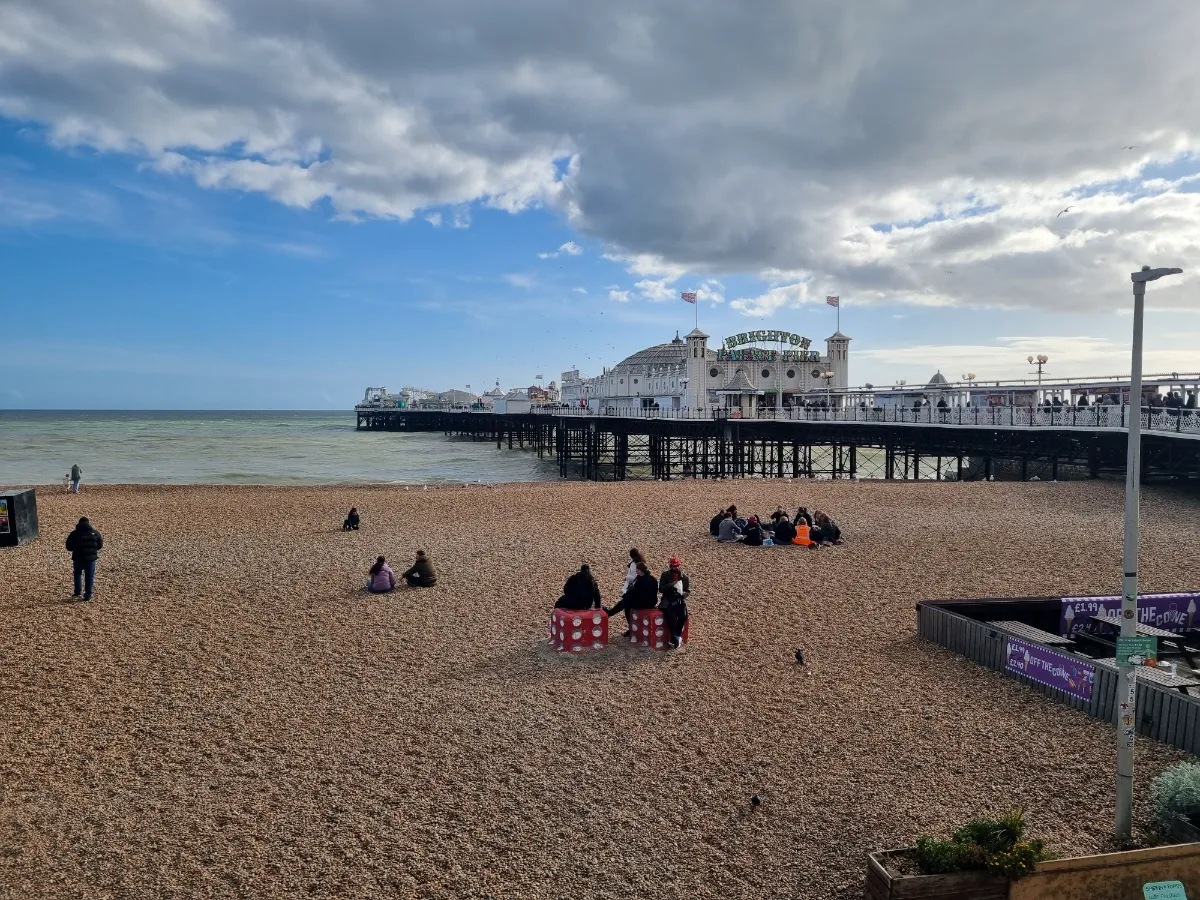
There are few things more deflating in travel than a city that arrives pre-hyped. Brighton had been building up goodwill in the recommendations pile for years. Everyone who’d been raved about it. The beach, the atmosphere, the vibe. It was apparently unmissable. One of those places you absolutely had to go.
Expectations were high. The reality was considerably less so.
To be fair to Brighton, it does have genuine character. It’s liberal, creative, and holds a well-earned reputation as one of the UK’s most inclusive and bohemian cities. People call it “London by the Sea,” which is a phrase that does a lot of marketing work. The nightlife is excellent, the independent culture is real, and the pub scene alone could justify a weekend. The problem is the gap between how it’s talked about and what you actually find when you arrive, which is a city that works much better from the inside than as a set of sights to tick off a list.
Walking around is easy enough. The centre is compact and flat, and you can cover the main areas on foot without any transport. The train from London Victoria or London Bridge takes around an hour and is cheap, which is probably Brighton’s single greatest asset as a destination.
The Beach: Let’s Address This Immediately
Brighton’s beach is not a beach in any meaningful holiday sense of the word. It is a large bank of grey pebbles that slopes into cold, choppy water. There is no sand. There is no gently shelving shore you can wade comfortably into. There is just a wall of rocks that will attack your feet on the way in.
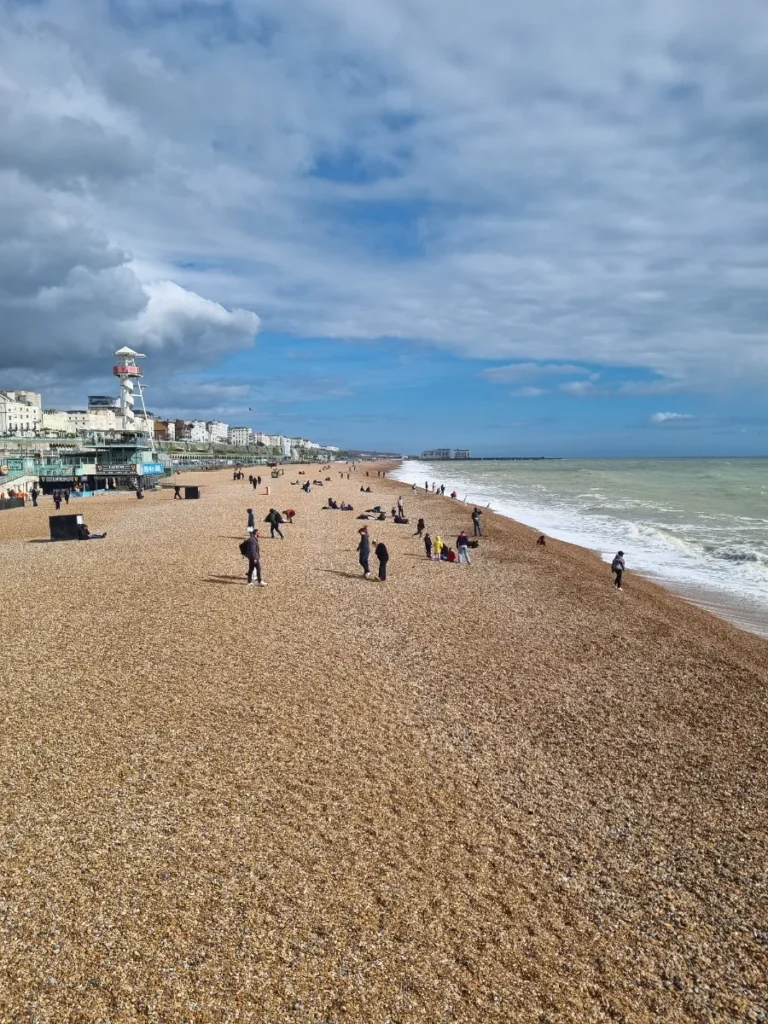
The waves themselves looked like they’d pick you up and slam you back down on the hard pebbles without a second thought. Some people do swim. They appear to be fine. Still.
To be fair, nobody hides this. Brighton has always had a pebble beach. But if you’ve arrived expecting golden sand and warm water because of the way people talk about it, the gap between expectation and reality hits hard. On a grey day, which this being southern England is a reliable possibility, the seafront has the energy of a car park with seagulls.
The Pier: For the Under-Tens, Mainly
Brighton Palace Pier looks cheerful in photos and slightly more threadbare in person. It stretches out over the water with arcades, rides, and a cluster of food stalls at the end. It charges £1 to enter. Ride wristbands are £25 on the door, or £20 booked online (if you’re over 1.2m).

If you’re travelling with children aged roughly five to twelve, this is probably a perfectly enjoyable hour. If you are an adult without children, there is a hard limit to how long you can stand in an amusement arcade watching someone play a claw machine before the existential weight of it all sets in. Twenty minutes, maybe. Thirty if you get a doughnut.
Inside the main pier building is filled with kids game machines, essentially gambling machines for kids. I could not believe how packed it was in there. A kids frenzy!
What’s Actually Worth Your Time
Brighton isn’t entirely without merit. It just buries its interesting parts under the weight of its own reputation.
The Royal Pavilion — £20 adults
The Royal Pavilion earns a visit without qualification. A Regency-era royal palace with Indian-inspired domes, minarets, and interiors that look like someone handed George IV an unlimited budget and absolutely no supervision. That’s essentially what happened. The Prince Regent, later George IV, used the original farmhouse on this site as a seaside retreat from the late 1700s, and between 1815 and 1823 architect John Nash transformed it into this extraordinary thing: an Indian exterior, a Chinese interior, and a European king who apparently had no issue with the contradiction. It shouldn’t work. It somehow does.
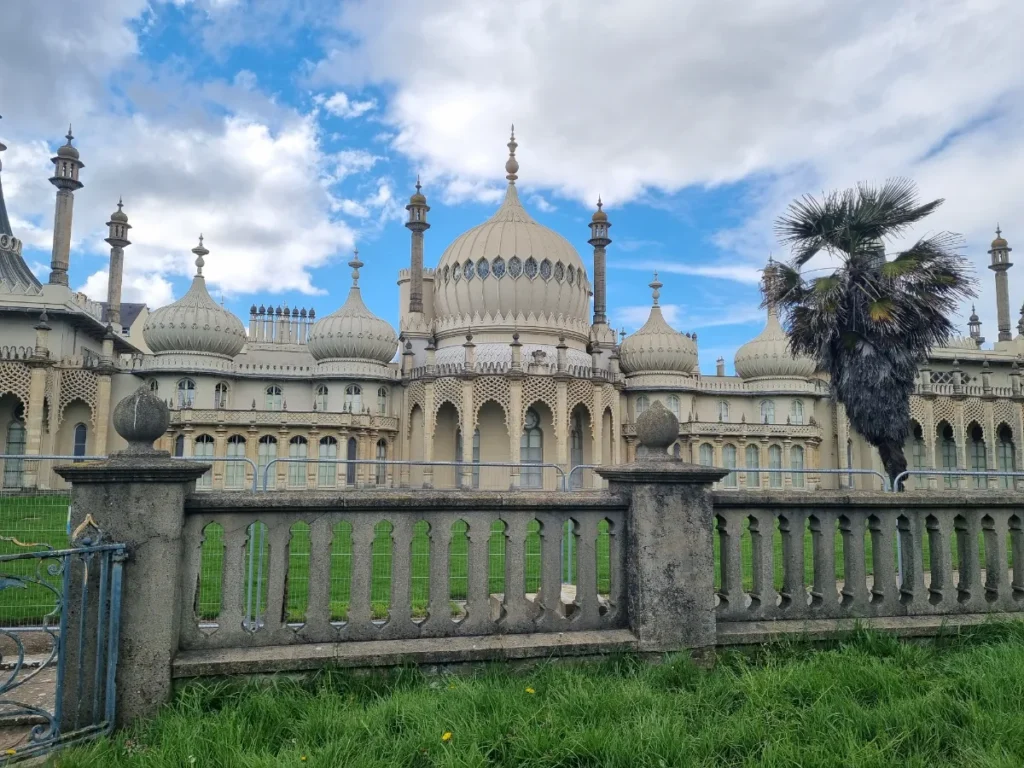
What makes it worth seeing is precisely how absurd and confident it is. The Banqueting Room has a central chandelier held by a cast iron dragon. The Music Room has a domed ceiling of gilded scallop shells. The Royal Kitchen was considered the most technically advanced in Europe at the time of its construction. The whole building is a monument to what happens when someone with extreme wealth and extremely unusual taste gets exactly what they want.
The Royal Pavilion Gardens surrounding it are free to walk through and make for a pleasant sit-down after the visit, particularly in good weather.
The Lanes and North Laine
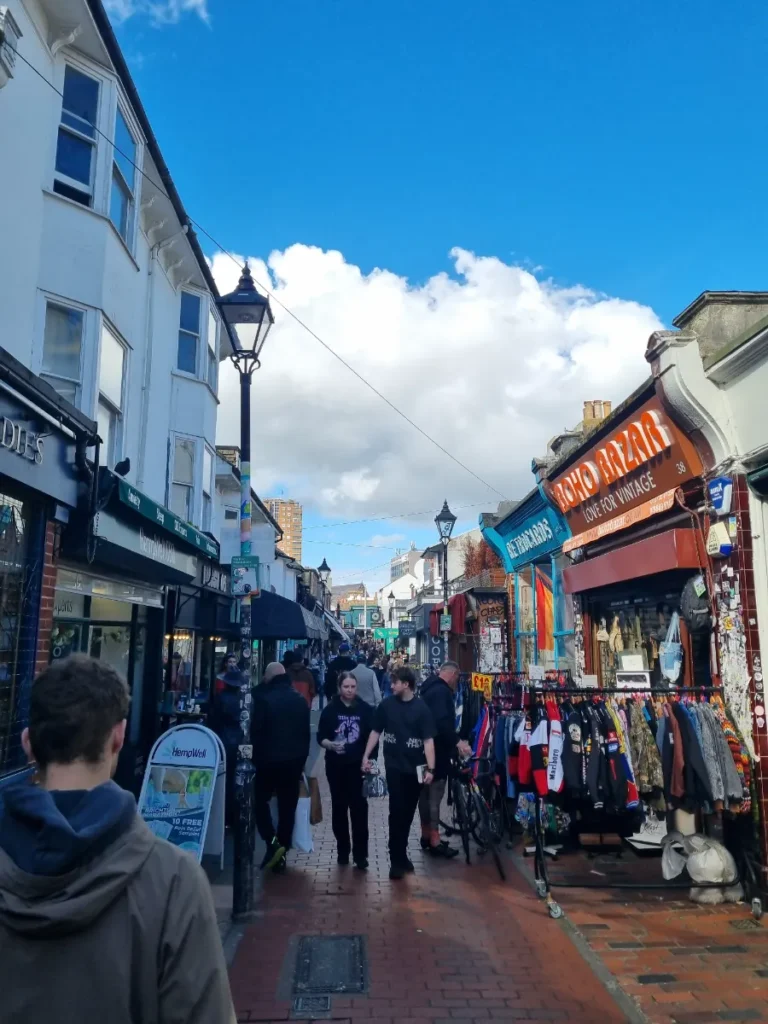
The Lanes are the best part of Brighton for a wander. A maze of narrow alleyways in the old town, full of independent shops, antique dealers, jewellers, and cafes. Compact, interesting, and free. Go here first and calibrate your expectations for the rest of the trip accordingly.
North Laine sits just above, with a more eclectic feel: vintage clothing, record shops, the kind of independent culture that exists in Brighton precisely because it hasn’t been entirely smoothed out by chain retail. Worth an hour.
The shopping and dining in both areas is good enough, though it doesn’t particularly appeal to me personally. It’s the same independent scene you’d find in any UK city that hasn’t been entirely Primark-ified. Pleasant, not revelatory.
Brighton i360 — from around £20
The i360 is a 162-metre observation tower on the seafront, the tallest moving viewing platform in Europe, with a glass pod that carries you up 138 metres for 360-degree views of the city, the coastline, and the South Downs. On a clear day you can see up to the Seven Sisters cliffs and across to the Isle of Wight.

The Sky Bar ticket includes a drink on the way up, which at least means you’ve got something to hold. It’s a novel experience for about ten minutes. After that it’s a slow circular view of Brighton, which is fine but not quite fine enough to justify the price on its own. If you’re the kind of person who enjoys observation decks and you’ve got time to fill, it’s there. If you’re not, skip it and spend the money on a meal instead.
The Undercliff Walk
If you want to escape the crowds around the pier and seafront, the Undercliff Walk is a 3-mile paved coastal path carved between chalk cliffs and the sea, running east from Brighton towards Saltdean. It’s free, properly dramatic in good weather, and noticeably quieter than anything on the main seafront.
Nightlife: Where Brighton Actually Delivers
This is where the city earns its reputation. Brighton’s nightlife is genuinely excellent, diverse, and runs later and more energetically than most UK cities its size.
Komedia Brighton in the North Laine is the headline venue, a multi-stage space running comedy, live music, and club nights. The Krater Comedy Club on weekends is the flagship night, mixing well-known acts with rising names. Worth booking ahead.
For seafront clubbing, the beachfront arches along the promenade house venues including Concorde 2, Patterns, and The Coalition, playing electronic and indie to a crowd that seems to have very few plans for the following morning. Walking the promenade and picking a venue based on what you can hear from the street is a reasonable strategy.
The Mesmerist in The Lanes is a multi-room venue with gin palace interiors, a 1920s-style bar tucked away inside, and a rooftop that fills up fast. Live jazz and swing most nights, DJs later.
Haus of Cabaret in Kemptown is the big night out option if you want proper entertainment alongside dinner: cabaret, drag, burlesque, and acrobatics in a plush venue that turns into a dance floor once the show ends. Book ahead, this one sells out.
Getting There
Brighton is an easy train from London, roughly an hour from Victoria or London Bridge, with trains running frequently and fares that won’t hurt. You can get there for less than £15, easily if you’ve got a Railcard. Read about it here if you haven’t got yours yet. It’s a reasonable day trip if you go in with calibrated expectations. Driving and parking in central Brighton is a largely unpleasant experience and not recommended.
The Bottom Line
Brighton is not a bad city. It’s just not the city anyone describes when they tell you to go. The beach will disappoint, the pier is for kids, and the shopping and dining, while pleasant, doesn’t justify a special trip on its own. The Royal Pavilion is worth the £20, the Lanes are worth the afternoon, and the nightlife is worth the evening. But honestly all of those, London does better. If you’re coming it’ll be just for the novelty, something to do for the weekend or just to see the place and make your own decision.
If you’re coming specifically for a night out or a weekend that’s more bars and music than sightseeing, Brighton delivers comfortably. If you’re coming because someone told you the beach is incredible, manage your expectations before you arrive. Not for me but could be your cup of tea.
Verdict: OVERRATED
Not a bad city. Just not the city anyone describes when they tell you to go. Manage your expectations, skip the pier unless you have kids in tow, and head straight to The Lanes. The beach is not what you’ve been told.