Manchester: A Fine City That Doesn’t Quite Justify the Trip
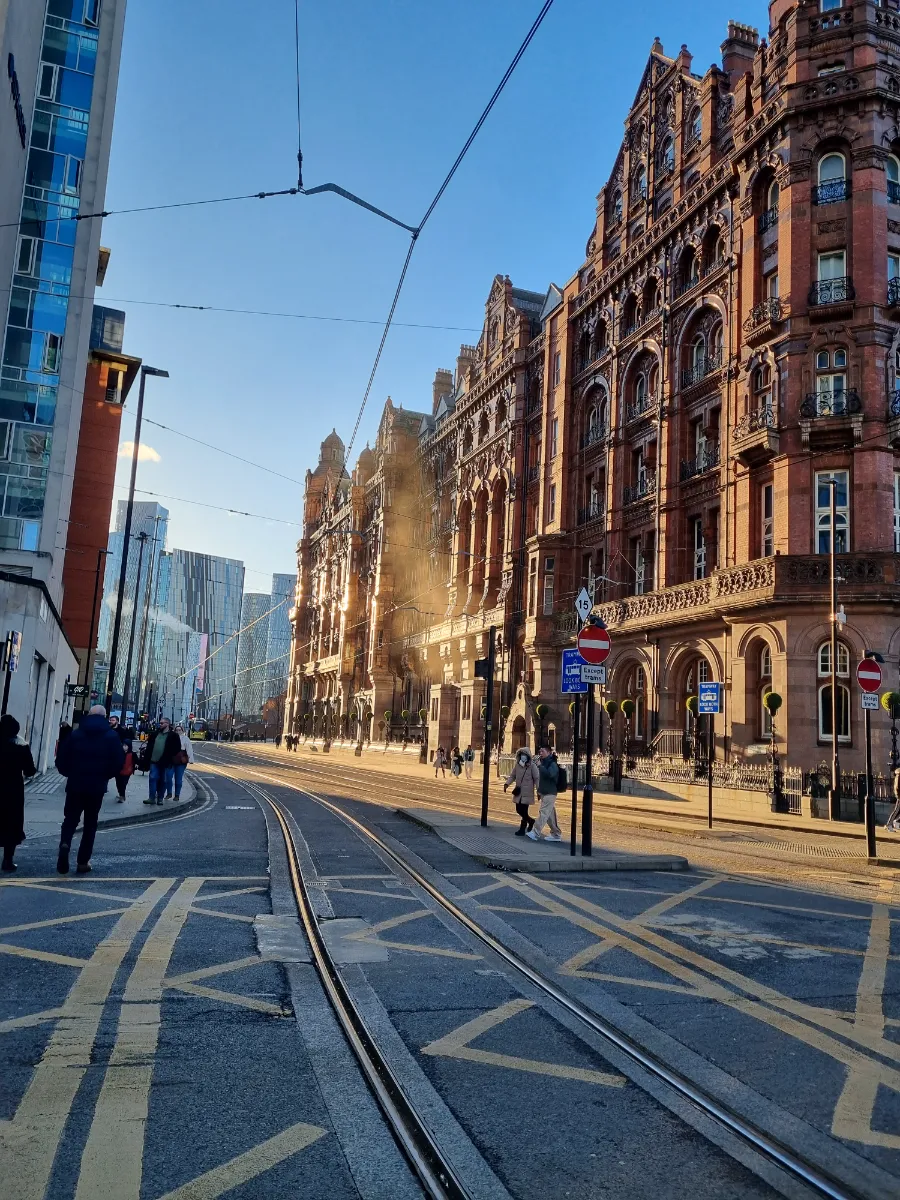
Manchester carries itself with a lot of confidence for a city whose main cultural exports are Oasis and rain. Ask anyone who lives there and they’ll tell you it’s the best city in the country. Ask anyone who’s visited and you’ll get a more measured response. It’s fine. The people are friendly, the city centre is easy to get around, there’s a surprising amount to see if you know where to look, and there are some genuinely well-designed spaces. But as a destination worth travelling to specifically? That’s a harder sell.
Getting There
Avanti West Coast runs direct trains from London Euston, with the fastest services doing it in around two hours, though the average is closer to two and a half depending on stops. Book an advance ticket early and you can pay from around £30 one way. Leave it late or travel at peak time and you’re into £70 territory. The gap between early booking and last minute is huge on this route, so sort it out as soon as your dates are confirmed.
Direct services also run from Birmingham, Liverpool, Leeds, and York. Manchester Airport has its own station with trains into Piccadilly in around 20 minutes.
Getting Around: No Complaints
The city centre is compact, flat, and entirely walkable. I covered everything on this list on foot without once thinking about transport. The Metrolink tram network is there if you need to reach the Quays or the outer areas, and it works well. For the main sights, just walk.
Stay central, around the Northern Quarter or Deansgate, and you’re within comfortable walking distance of everything. Hostel beds run from around £20 to £30 a night, budget hotel doubles from around £55 upwards. Check the football fixture list before booking since Manchester United and City home games push accommodation prices up sharply across the whole city.
The Spaces: Where Manchester Actually Delivers
Castlefield is the most attractive part of the city centre. A disused Victorian railway viaduct has been turned into an elevated walkway and garden above the old industrial canal basin. You’ll walk it in 15 minutes, but it’s quite nice thing to come across and a good spot to break up the day. It’s the closest thing Manchester has to a proper moment for a visitor. I’ve stayed at the YHA here. A really nice spot, albeit a little secluded for the much of the action.
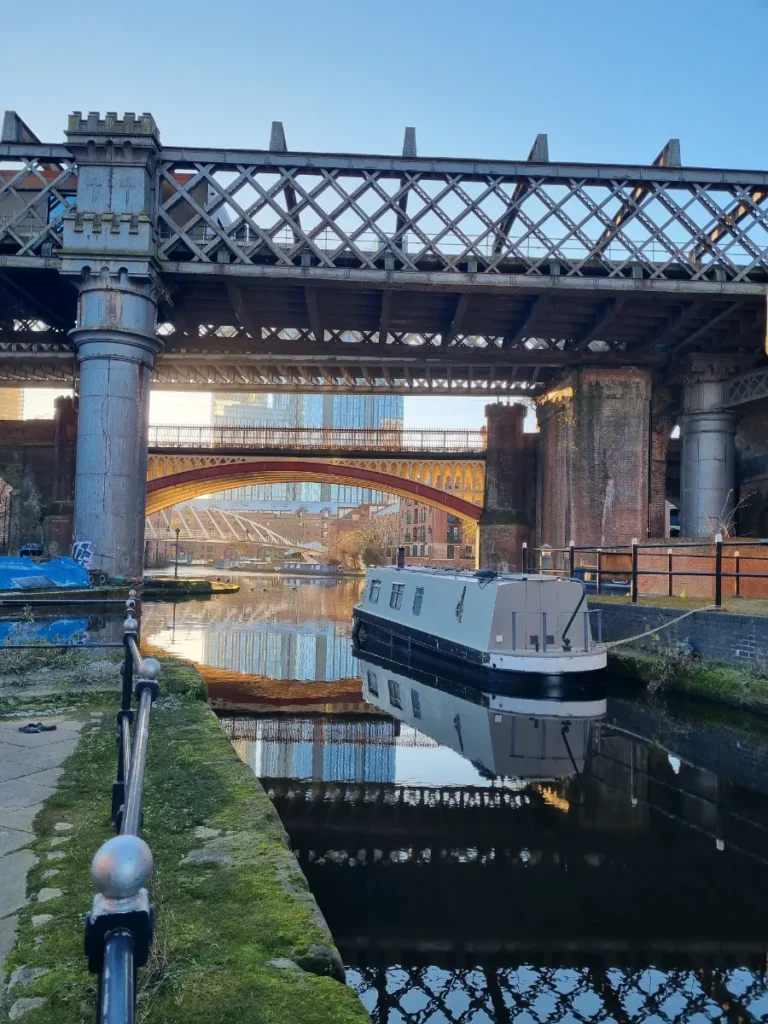
The Northern Quarter is worth a wander for the street art and the independent coffee shops. More for atmosphere than for anything specific to tick off.
Spinningfields is Manchester’s gleaming financial quarter, a regeneration project that transformed a run-down area into a landscape of glass towers, restaurants, and bars. Sometimes called the Canary Wharf of the North, which is both accurate and probably not meant as warmly as it sounds. Pleasant enough to walk through.
Afflecks (formerly Affleck’s Palace) in the Northern Quarter is four floors of independent stalls selling vintage clothes, records, and alternative bits and pieces. To be completely honest, a lot of it feels like indie shops selling junk purely for the sake of selling something “different.” If you’re into retro pop-culture trinkets and counterculture atmosphere, it’s an intriguing place to wander briefly. If you aren’t into that sort of thing, you’ll be out in five minutes.
Manchester Cathedral sits near Cathedral Gardens and is completely free to enter. It’s a quiet, medieval Gothic building that offers a peaceful contrast to the modern city outside. It won’t rival York Minster or Westminster, but if you’re walking past, it’s worth sticking your head in for a quick look around.
The Museums: Where Manchester Earns Its Keep
This is honestly where the city’s case is strongest. Almost every major museum in Manchester is free, and several of them are excellent.
Science and Industry Museum sits on the site of the world’s first inter-city passenger railway station, which is already a more interesting origin story than most museums can claim. It traces 250 years of innovation with roots in Manchester, from the industrial revolution to computing, nuclear physics, and beyond. The Power Hall reopened in late 2025 after a multi-year restoration and is now one of the finest industrial galleries in the country: a vast space packed with working steam engines, including the Planet replica, a recreation of the 1830 Liverpool-Manchester locomotive. Open daily 10am to 5pm, free entry, just walk on in.
People’s History Museum is the national museum of democracy and the story of working people in Britain. If that sounds dry, it isn’t. It covers trade unions, suffragettes, protest movements, and the fight for the vote, all in a former pump house right in the city centre. Free, and worth an hour if social history interests you at all.
Manchester Museum on Oxford Road covers natural history, Egyptology, and world cultures, with a 130-year-old sperm whale skeleton as the centrepiece of the natural history galleries. Free. Particularly strong on ancient Egypt if that’s your interest.
Manchester Art Gallery in the city centre has a strong Pre-Raphaelite collection alongside contemporary work. Free.
National Football Museum in the Urbis building at Cathedral Gardens houses the world’s largest collection of football memorabilia, with 2,500 objects on display at any one time including the oldest FA Cup trophy and interactive exhibits. Adult entry is £16-£18 depending on the date and time. Worth it if football is your thing; less so if it isn’t, since the collection very much assumes you care.
John Rylands Library is the best thing in the city. Neo-Gothic, built in 1900, and it looks like a film set the moment you walk in. A reading room of vaulted stone ceilings and stained glass that you genuinely stop and stare at. Free. The catch: it’s only open Wednesday to Saturday, 10am to 5pm. Closed Sunday, Monday, and Tuesday. Check the days before planning around it because if your trip lands on the wrong three days, you’ve missed the standout attraction.
IWM North (Imperial War Museum North) sits across the Salford Quays, a 20-minute Metrolink ride from the centre. The building, designed by Daniel Libeskind, is one of the more striking pieces of architecture in the northwest, a shattered globe of overlapping steel shards. Inside, the Big Picture Show runs every hour, projecting images and sound across the entire floor and walls of the main gallery. Free. Worth the tram ride if you have time.
The Whitworth on Oxford Road is one of the better art galleries outside London, with a strong collection of textiles, wallpapers, and modern art housed in a beautiful building next to Whitworth Park. Free.
What I’d Do Over Two Days
Day one: John Rylands Library in the morning (check it’s open), Castlefield and a walk along the canal in the late morning, Science and Industry Museum for the afternoon, Northern Quarter for the evening.
Day two: People’s History Museum, Manchester Art Gallery, and Manchester Museum, all free and within walking distance of each other, with a Metrolink trip out to IWM North if there’s time before heading back.
That covers the best of it. I struggled to find enough for a third day that didn’t feel like repeating the same streets.
If it were me, I’d do it all in a day just to see it for myself and say I’ve been, then take myself somewhere that actually has things to see and do like Liverpool, York or the Peak District.
The Honest Assessment
Manchester is a city that rewards living in considerably more than visiting. Its music venues, food scene, and pub culture reveal themselves over time through locals who know where to go, not through a weekend itinerary. As a visitor with a couple of days and a list of sights, you’ll cover the ground comfortably, see some decent museums, and find yourself wondering what all the fuss is about by Sunday afternoon.
That’s not a criticism of the city. It’s a mismatch between how Manchester is talked about and what it actually offers a tourist.
Verdict: OVERRATED
A great city to live in. A middling one to visit. Don’t go out of your way. If you’re already in the north, give it a day just for kicks.