Liverpool Cathedral: Better Than You’re Expecting
Cathedrals are one of those things that have a diminishing returns problem as a tourist. You’ve seen one soaring nave, one set of stained glass windows, one information board explaining which bishop commissioned what in 1387 — and the next one starts to blur into the last. It takes something genuinely exceptional to cut through that fatigue.
Liverpool Cathedral caught me by surprise. I’d never heard of it and as such, had no expectations.
The Walk There
The cathedral sits on St James’ Mount, a raised sandstone ridge to the south of the city centre. It’s about fifteen minutes on foot from Liverpool Lime Street, and you can navigate to it almost entirely by looking up. It announces itself from a long way away.
On the way, or just after depending on your route, you’ll pass two other buildings worth a few minutes of your time.
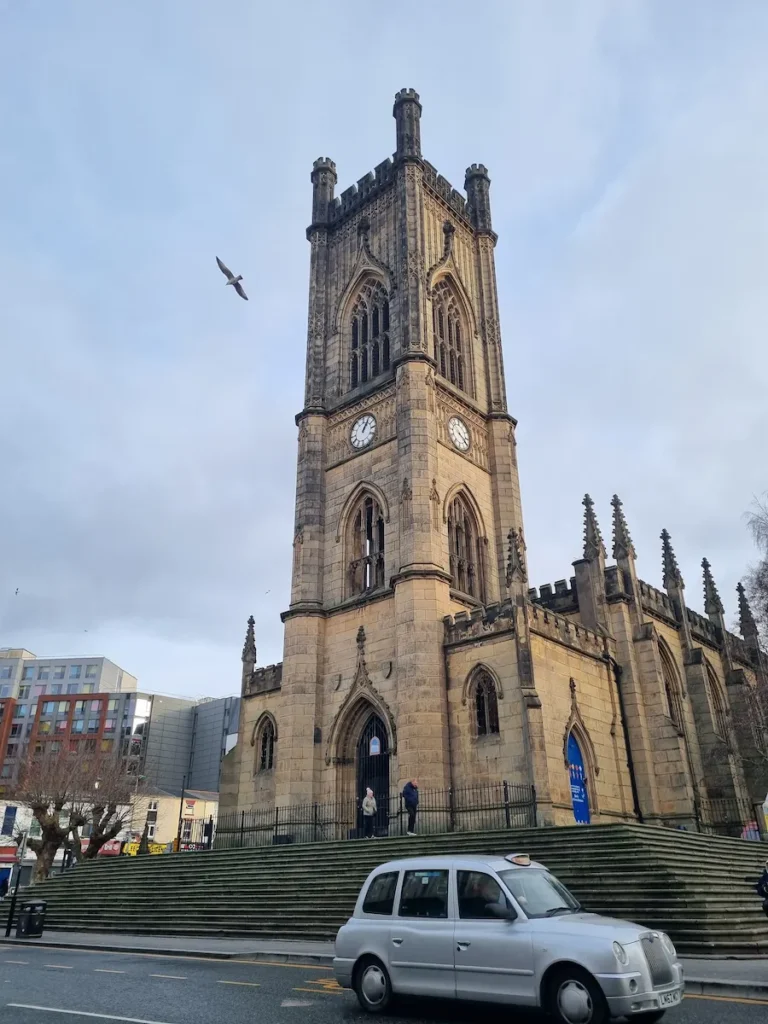
St Luke’s Church at the top of Bold Street is what locals call the Bombed Out Church, and the name does the explaining for you. On 6 May 1941, during a seven-night bombardment of Liverpool known as the May Blitz, the church was struck by an incendiary bomb that caused a large fire sweeping through the building. The tower clock stopped at 3:36am as the mechanism perished. The masonry shell survived but the interior and roof were almost entirely destroyed. It’s been left that way deliberately. A roofless, windowless shell of a church, open to the sky, preserved as a monument. Eerie and genuinely affecting. Free to walk around, and it earns two minutes of your time even if you’re in a rush.
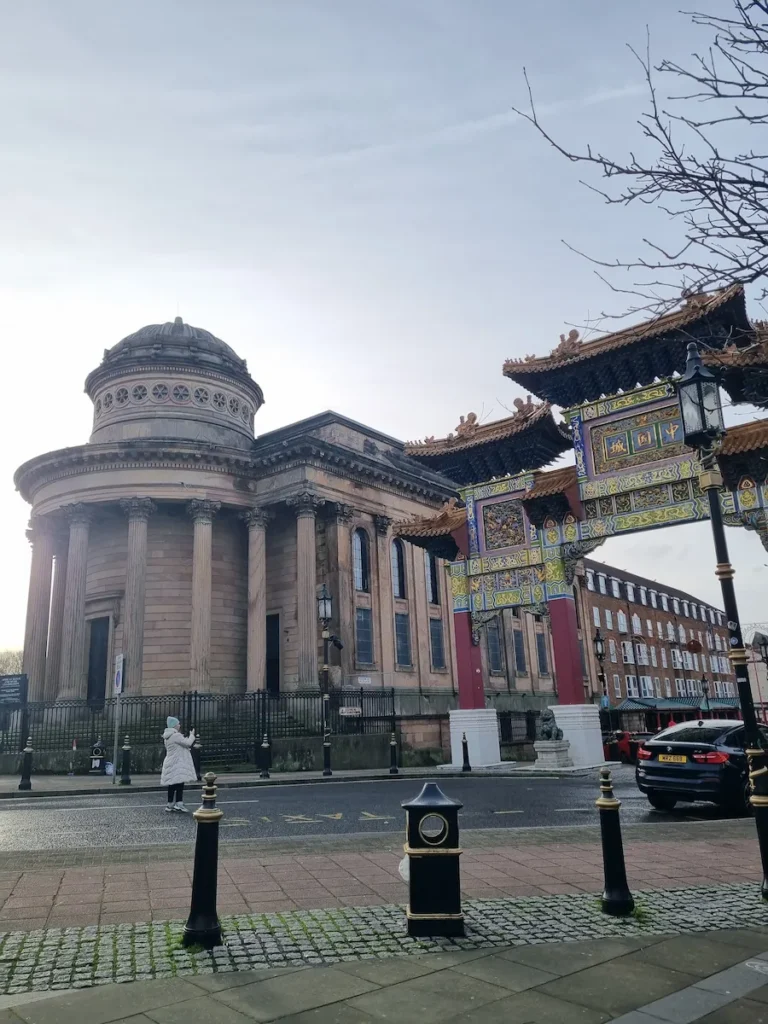
Further along Hope Street sits Liverpool Metropolitan Cathedral, which is the oriental-looking building you’ll spot from a distance. Known locally, with great affection, as Paddy’s Wigwam. It was completed in 1967 to a modernist design by Sir Frederick Gibberd, and it looks like nothing else in the country — a circular concrete crown with a lantern tower on top, more spaceship than church. Worth walking around the outside. The interior is striking too, all coloured glass and circular space. Free to enter.
Then you turn around, look up Hope Street in the other direction, and there’s the Anglican Cathedral waiting at the far end of it. Two cathedrals, one street, completely different centuries, completely different ideas about what a church should look like. Liverpool does this kind of thing well.
The Cathedral Itself: A Monster of a Building
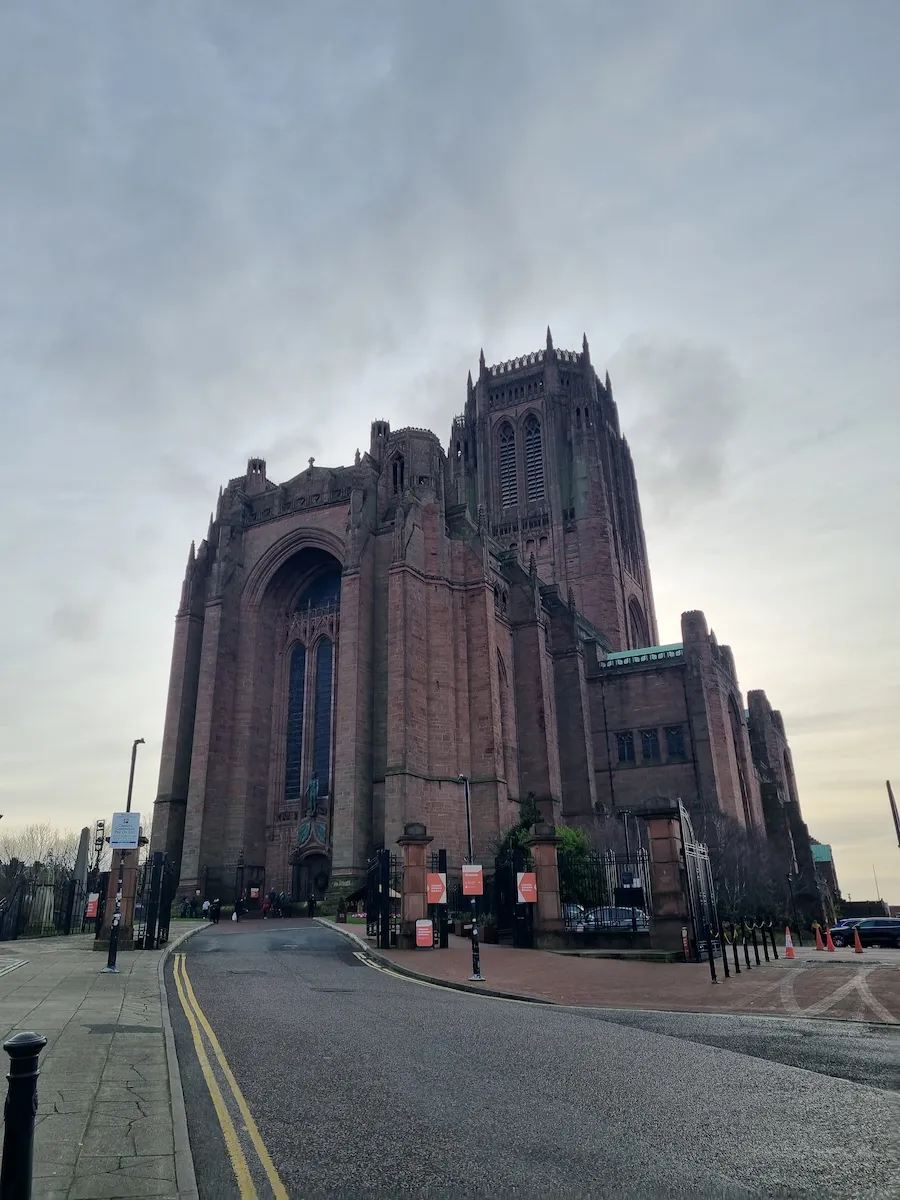
Liverpool Anglican Cathedral is the longest cathedral in the world, stretching 189 metres from end to end, with a tower rising to 101 metres. In terms of overall volume it ranks as the fifth-largest cathedral in the world. None of these numbers really prepare you for standing in front of it.
The sheer scale of the thing is the first thing that hits, and it keeps hitting as you get closer. Most cathedrals, you can take in the facade in one look. This one requires you to keep moving your eyes. The sandstone is deep red, the Gothic arches are enormous, and the whole building sits up on its ridge looking out over the city with the kind of quiet authority that takes 74 years of construction to accumulate.
The winning design in 1901 came from a 22-year-old student named Giles Gilbert Scott, who had never designed a major building before and was, somewhat awkwardly, a Roman Catholic. The committee went with him anyway, which turned out to be one of the better architectural decisions in British history. Scott didn’t live to see it finished — he died in 1960, aged 79, and is buried outside the west entrance. He’s also, incidentally, the man who designed the red telephone box, which is either a pleasing footnote or a jarring one depending on how you feel about British icons.
Inside: More Than Expected
Entry is free. Donations are welcomed and deserved.
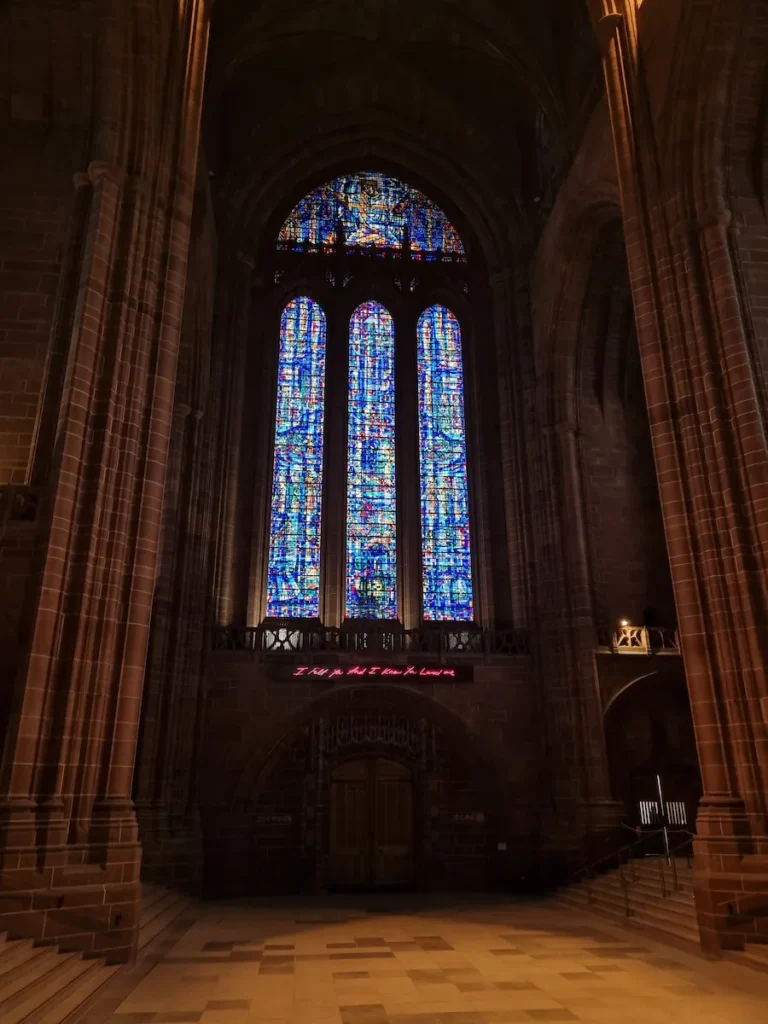
The interior is vast in a way that takes a moment to process. The cathedral contains the tallest and widest Gothic arches in the world, and the light inside shifts in a way that makes the space feel different depending on where you stand and what time of day you’re there. The Great West Window alone covers 1,600 square feet of glass, the most mesmerising piece of stained glass I’ve ever set eyes on to date.
The information on how the cathedral was built is genuinely the most interesting part for the non-religious visitor. Its construction spanned two world wars, financial depressions, and 74 years of changing architectural tastes, and the exhibition inside traces all of it — the engineering decisions, the financing, the arguments, the compromises. Medieval construction concepts were taken to their limits using 20th century materials and techniques, and that tension between old and new runs through the whole building if you know to look for it.
The tower can be climbed for a small fee, and the views from the top take in Liverpool, the Mersey, and on a clear day the hills of North Wales.
Practical Details
- Entry: Free. Donations appreciated.
- Tower climb: £8.
- Getting there: 15 minutes on foot from Liverpool Lime Street. The walk up Hope Street past both other cathedrals is the right way to arrive.
- Time needed: 30 minutes for the cathedral itself. Add another 30 minutes if you’re walking the Hope Street route and stopping at St Luke’s and the Metropolitan Cathedral.
Do it in order: Bombed Out Church, Metropolitan Cathedral, Anglican Cathedral. Walk the mile between them. It’s one of the more quietly impressive free afternoons in any UK city.
Verdict: UNDERRATED
Free, enormous, and far more interesting inside than the average cathedral has any right to be. If you’re in Liverpool, there’s no reason not to go.