Woodhenge and Durrington Walls: Fascinating History, Nothing to See
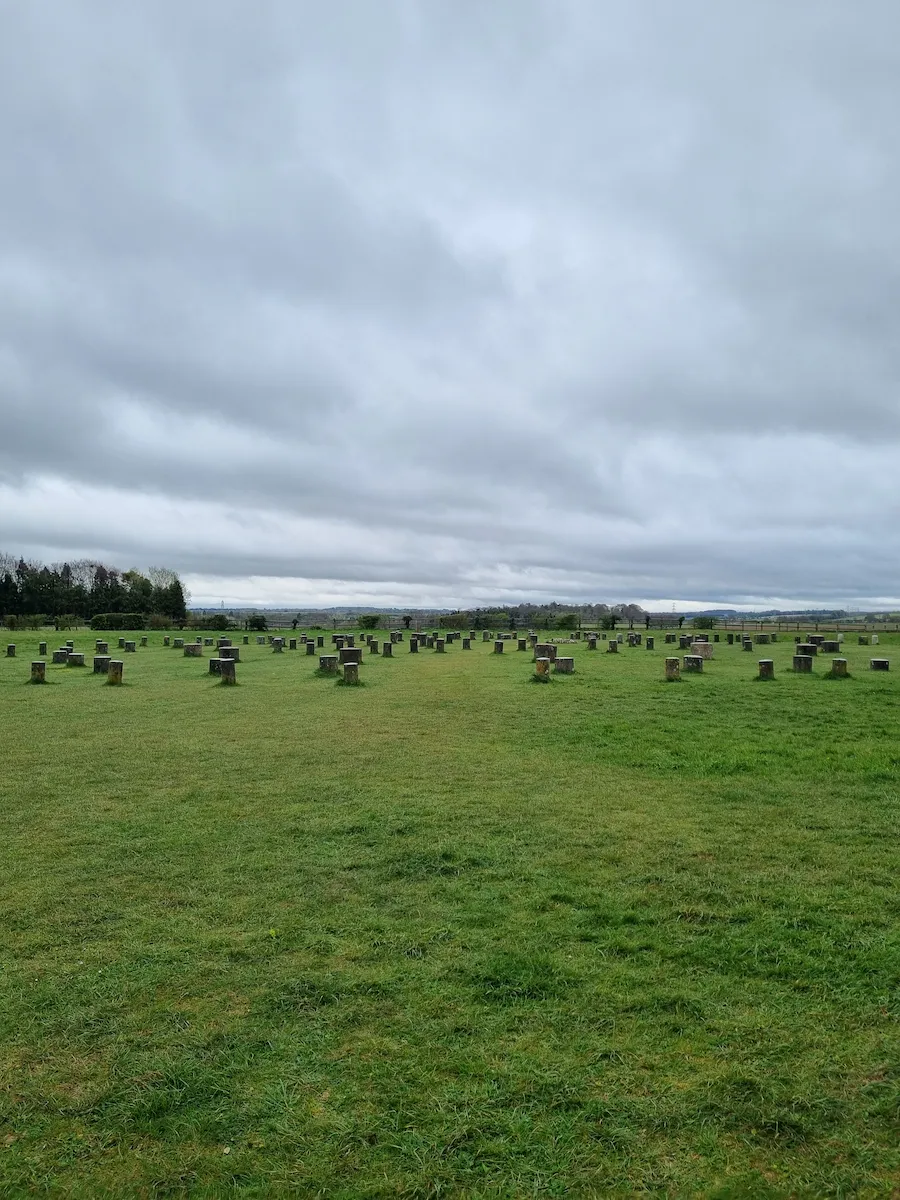
Somewhere between “genuinely interesting” and “what am I looking at” sits Woodhenge, a 4,500-year-old monument two miles north of Stonehenge that most visitors bolt onto their itinerary without really knowing what they’re in for. Spoiler: it’s a field with concrete stumps in it.
That’s not me being harsh. That’s just what it is.
What Woodhenge Actually Was
To be fair, the history here is somewhat compelling. Around 2,500 BC, six concentric rings of timber posts stood here, surrounded by a ditch and external bank forming a henge about 90 metres across. The original posts were up to six metres high, crowded together, perhaps strung with offerings or carved and painted like totem poles. By all accounts, it would have been an imposing, atmospheric place.
The wood rotted. The ditch got ploughed flat by farmers. And what replaced it all were concrete markers indicating the positions of the internal wooden posts, installed in the 1920s after the site was excavated. So you’re essentially looking at a low-budget diagram of something that no longer exists.
There is one genuinely eerie detail worth knowing: at the centre of the structure was the grave of an infant about three years old, who had died from a blow to the skull. The position of the grave is marked by a cairn of flints. That’s the kind of thing that makes you stop for a moment. It’s just a shame there’s so little else to hold your attention once you do.
Durrington Walls: Britain’s Largest Henge, Also Mostly Gone
Just 70 metres up the road sits Durrington Walls, the largest henge monument in Britain, a massive banked and ditched enclosure over 400 metres across and nearly 1.5km in circumference. In its day, this was extraordinary. The ditch alone was originally 5.5 metres deep, 7 metres wide at the bottom, and 18 metres wide at the top, with a bank in some areas 30 metres wide.
There’s evidence it was a working settlement too. Around 2,600 BC a timber circle called the Southern Circle was built here, facing the sunrise of the winter solstice, and archaeologists believe thousands of people may have gathered at this site in the Neolithic period.
What’s actually there now? Eroded remains of the inner slope of the bank and the outer slope of the internal ditch, appearing as a ridge surrounding a central basin. In plain terms: a grassy bump. Part of the site was also cut through when the A345 was realigned in the 1960s, so a chunk of it is now literally under a road. If there was something to see, I couldn’t find it.
The Free Parking Problem
Street parking along Fargo Rd or at the Woodhenge Carpark is free and usually easy to find. There’s a reason for that. Most people who visit Stonehenge don’t bother coming here at all, and those who do tend to spend about five minutes before getting back in the car.
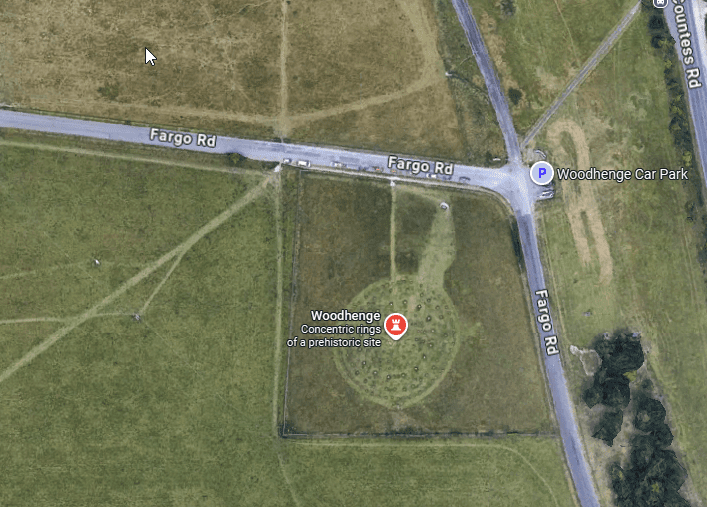
Both sites are managed by English Heritage and are completely free to enter, which is the one genuinely good thing about them. No booking required, no entry fee, no gift shop to navigate on the way out.
So Should You Go?
If you’re a history enthusiast who can fill in the blanks with your own imagination, or you’re already at Stonehenge and fancy a short drive, it’s worth a look. The landscape itself is quietly pleasant, the Wiltshire countryside does its thing, and knowing what was once here does give the place a certain weight.
But if you’re expecting anything remotely like Stonehenge, you’ll be underwhelmed. There are no stones, no atmosphere, no interpretive displays on site, and the concrete posts don’t really help you picture what stood here. The history is real. The evidence of it largely isn’t.
Verdict: OVERRATED
Bundled onto Stonehenge itineraries because it’s nearby, not because it earns its place. The history is worth five minutes on Wikipedia. The site itself is worth about the same.